Buying Conventional Fire Alarm Systems in Nepal | Safelincs Technologies Guide
Looking for a fire alarm in Nepal? Learn how to choose and buy a Conventional Fire Alarm System from Safelincs Technologies. Expert tips for Nepalese businesses.
The Ultimate Guide to Buying a Conventional Fire Alarm System in Nepal: Protect Your Property with Safelincs Technologies
Safety isn’t just a checklist; it’s a commitment. In a rapidly developing country like Nepal, where urban density is increasing and infrastructure is evolving, fire safety has become more critical than ever. Whether you own a small boutique in Kathmandu, a warehouse in Biratnagar, or a residential complex in Pokhara, understanding the mechanics of a Conventional Fire Alarm System is the first step toward safeguarding your investment and, more importantly, human lives.
As a leading provider of safety and security solutions, Safelincs Technologies has been helping Nepalese businesses and homeowners navigate the complexities of fire protection since 2017. In this comprehensive guide, we will break down everything you need to know about conventional fire alarm systems and provide a step-by-step roadmap to purchasing the right system from a trusted local partner.
What is a Conventional Fire Alarm System?
Before diving into the "how-to," let’s understand the "what." A conventional fire alarm system is the traditional, reliable standard for fire detection. It works by dividing a building into various "zones."
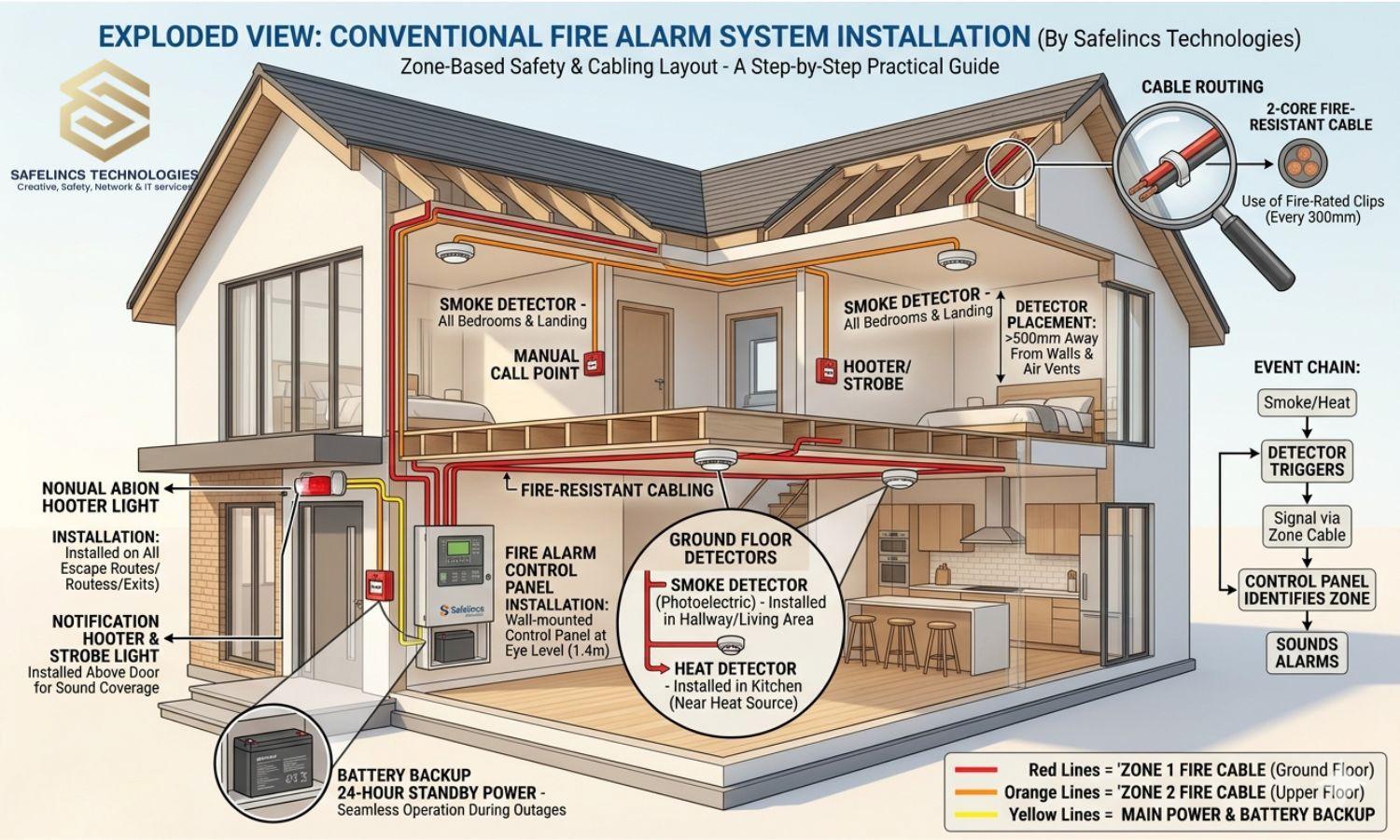
When a smoke detector or heat sensor is triggered, the control panel identifies the zone where the incident is located (e.g., "Zone 2: Second Floor"). While it doesn't pinpoint the exact room like more expensive Addressable Systems, it provides a highly reliable and cost-effective solution for small to medium-sized premises.
Core Components of a Conventional System:
Fire Alarm Control Panel (FACP): The "brain" that monitors all zones and triggers alarms.
Detectors: Smoke detectors (photoelectric or ionization), heat sensors, or combination detectors.
Manual Call Points (MCP): The "break glass" units for manual activation during an emergency.
Notification Appliances: Sirens (hooters), bells, or strobe lights to alert occupants.
Power Supply: Includes a battery backup to ensure the system works during Nepal's frequent power fluctuations.
Why Choose a Conventional System for Your Nepalese Property?
In Nepal, budget, durability, and ease of maintenance are often top priorities. Here is why the conventional route is often the best:
Cost-Effective: The hardware and installation costs are significantly lower than addressable systems, making it ideal for budget-conscious startups and homeowners.
Simplicity: It is easy to operate. You don’t need a specialized software engineer; any trained local technician from Safelincs Technologies can manage the maintenance.
Proven Reliability: Brands like Agni Protection and System Sensor, available through Safelincs, are built to withstand the environmental challenges in Nepal.
Perfect for Small Businesses: If you have a retail shop, a small school, or a 3-story residential building, a 2-zone or 4-zone panel is more than sufficient.
How to Buy a Fire Alarm System in Nepal: A Step-by-Step Guide
Buying life-safety equipment requires technical vetting. Follow this roadmap to ensure you are fully protected:
1. Conduct a Site Assessment
Walk through your property. How many floors? Are there kitchens where you need heat detectors to avoid false alarms from cooking? Or offices where smoke detectors are essential? Safelincs Technologies offers consultancy to help identify these high-risk areas.
2. Choose the Right Brand
Don’t gamble with "no-name" products. Safelincs Technologies stocks world-class brands:
Agni Protection: Rugged, South Asian-tested panels ranging from 2-zone to 32-zone.
System Sensor: Renowned for high-sensitivity smoke and heat detectors.
Honeywell: Global leader in fire safety technology.
3. Check for Certifications
Ensure the products are ISI marked or have CE/UL certifications. In Nepal, following international standards is the best way to ensure the equipment won't fail when you need it most.
4. Professional Installation is Key
Proper wiring is the difference between a life-saving alert and a silent failure. Ensure your vendor provides:
Fire-Redundant Cables: Regular PVC wires can melt, cutting off signals before the alarm sounds.
Strategic Placement: Detectors must be placed away from air vents and at correct heights.
5. Factor in the "Nepal Context"
Power Stability: Ensure your panel includes a 24-hour battery backup to handle load-shedding.
Local Support: Choose a partner like Safelincs, based in Hanumansthan, Lalitpur, for quick on-site support and spare parts.
Product Spotlight: Safelincs Top Picks
Agni 4-Zone Conventional Panel: A favorite for small offices in Kathmandu. It’s user-friendly with clear LED indicators for "Fire" and "Fault."
System Sensor Smoke Detectors: Highly reliable photoelectric sensors that reduce false alarms.
2-Zone RE-102 Panel: An affordable entry-point for small residential homes.
Frequently Asked Questions (FAQ)
Q: How much does a conventional fire alarm cost in Nepal?At Safelincs Technologies, a basic setup (Panel + Detectors + MCP + Hooter) can range from NPR 15,000 to 45,000 depending on the number of zones and the brand (e.g., Agni vs. System Sensor).
Q: Can I install it myself?We strongly advise against DIY. Fire safety systems require specific loop resistance and voltage checks that only professionals should handle.
Q: Smoke detector vs. Heat detector – which do I need?Use smoke detectors in bedrooms and hallways. Use heat detectors in kitchens, garages, or dusty warehouses where smoke detectors might trigger false alarms.
Q: How often should I test the system?Test your system at least once a month using the "Test" button on your panel and by activating a manual call point.
Conclusion: Secure Your Future with Safelincs
Investing in a Conventional Fire Alarm System is a smart, responsible, and life-saving decision. In a country like Nepal, being prepared is the only way to mitigate the risks of fire. By choosing a trusted partner like Safelincs Technologies, you aren't just buying hardware; you are buying peace of mind, professional installation, and long-term support.
Don't wait for a "near-miss" to take action. Secure your property today.
Contact Safelincs Technologies Today:
Location: Hanumansthan-10, Lalitpur, Nepal
Website:safelincstech.com
Email: [email protected]
Expertise: Over 8 years of experience in the Nepalese safety and security market.
Written & Published for Safelincs Technologies By :
"The strength of a conventional system isn't just in its hardware, but in the logic of its zone design. A well-mapped system can save critical minutes when seconds are all that matter."
Surya Poudel’s contribution to the fire safety discourse provides actionable intelligence for anyone responsible for life safety systems.
Follow Him in His: Surya Poudel on LinkedIn.