
Fire Safety Equipments & Products

Foam Type Fire Extinguishers
Cease Fire 9 Liters AFFF Foam Type Fire Extinguisher.Rs. 0
Rs. 7,500-4% OFF
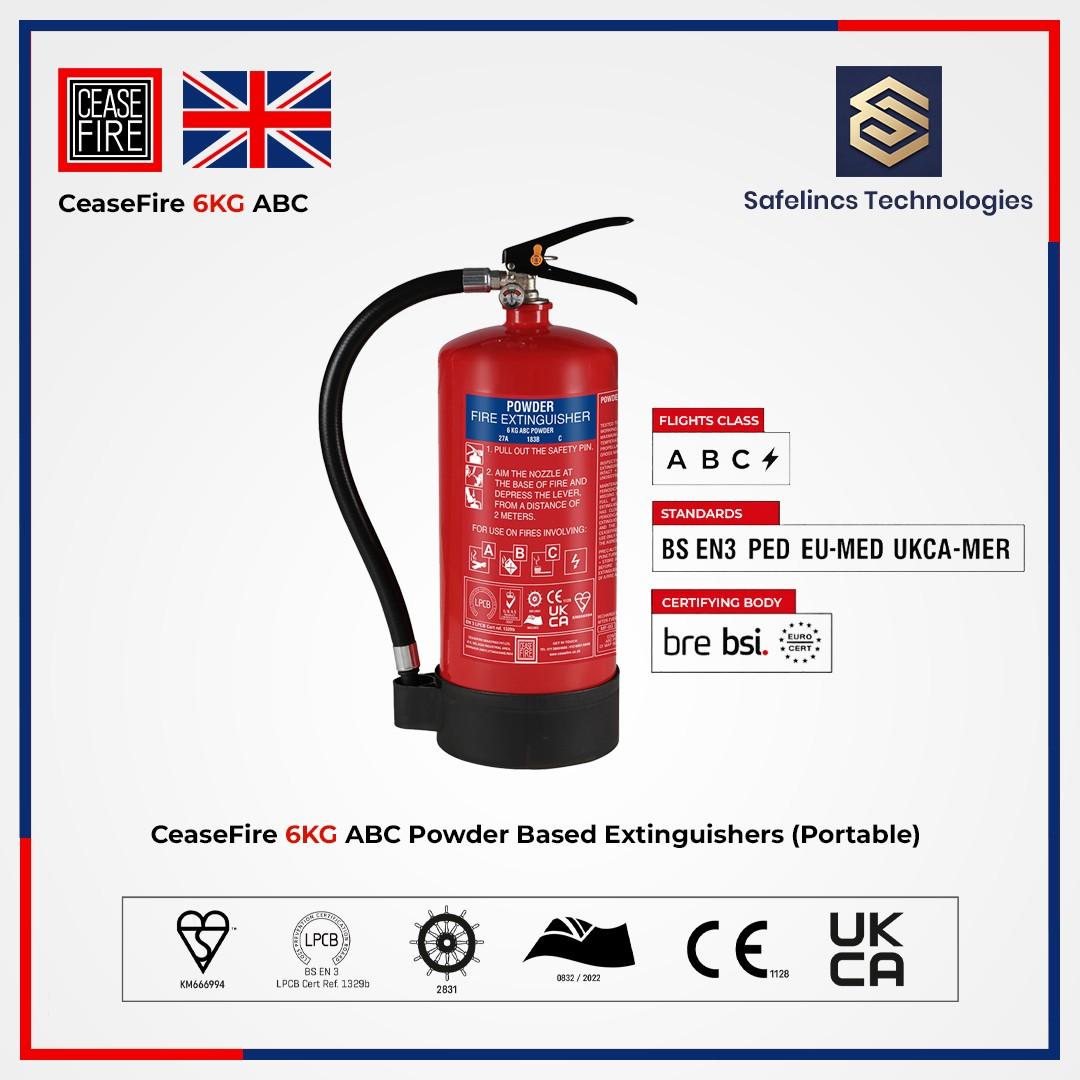
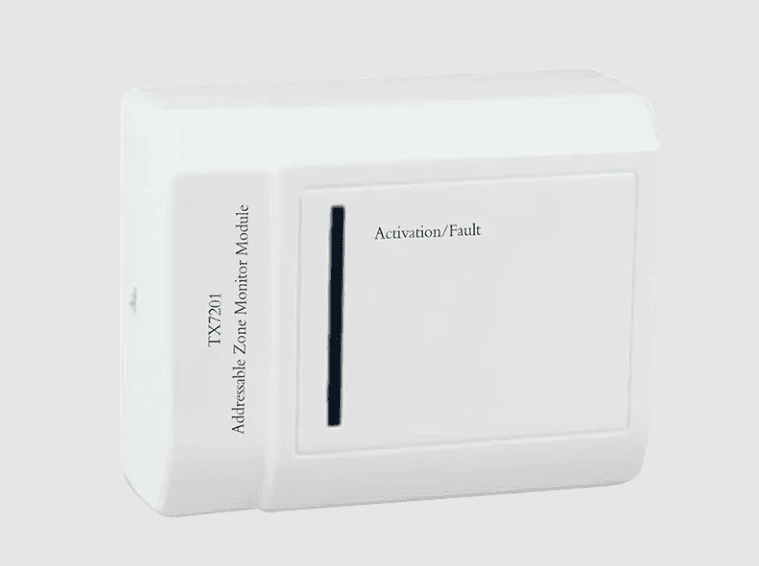

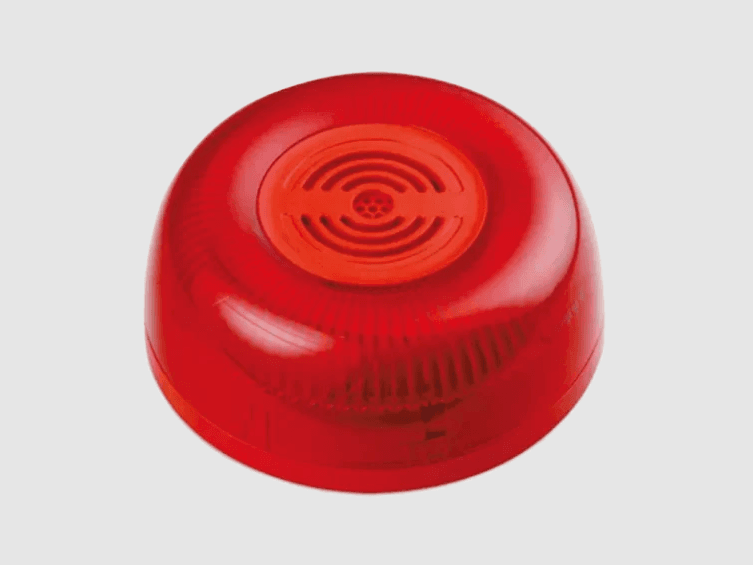
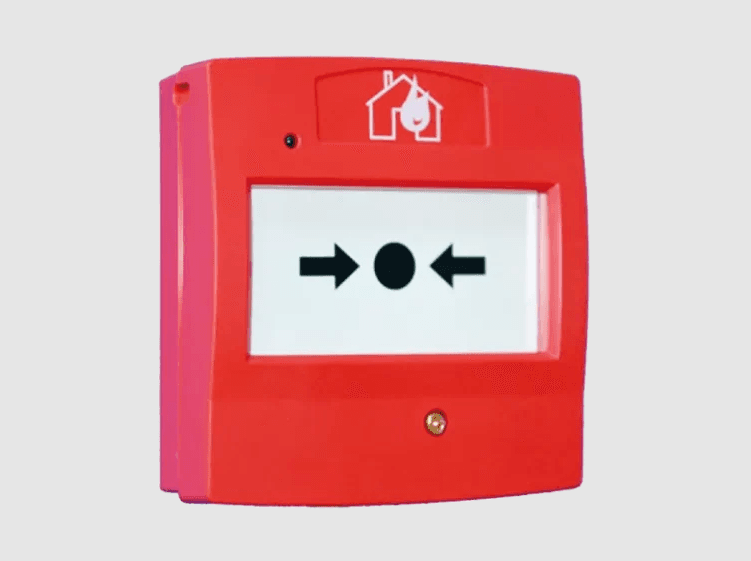
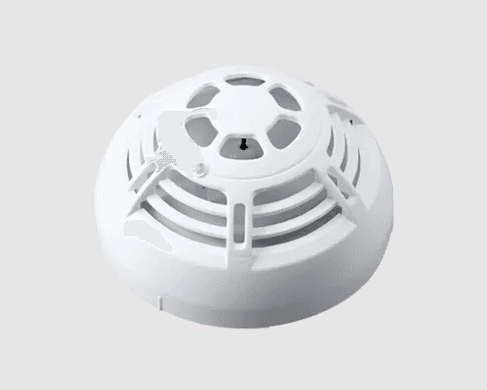
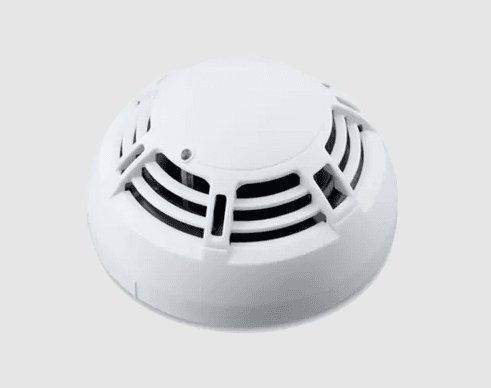
A reliable fire protection setup is built by combining the correct fire safety equipment, detection devices, alarm systems, suppression equipment and firefighting products according to the building risk, occupancy, layout and technical requirements.
Safelincs Tech supplies fire safety products for residential, commercial and industrial applications in Nepal, including fire extinguishers, fire alarm systems, fire hydrant equipment and firefighting products. These categories currently form the main fire-safety product groups on the website.
A properly planned system should consider detection method, panel architecture, device compatibility, alarm notification, extinguishing agent, system pressure, backup power, evacuation and future maintenance rather than selecting equipment only according to price.
Shop Fire Safety Equipment & Products in Nepal
Fire protection generally operates across several technical layers:
Fire Detection → Signal Processing → Alarm Notification → Fire Suppression → Firefighting → Evacuation
Safelincs provides equipment for these different stages, including smoke and heat detectors, alarm control equipment, manual call points, sounder-strobes, extinguishers, hydrant components, fire-rated doors and firefighter protection gear.
Explore Our Products:
How Fire Safety Equipment Works as a Complete System?
Fire protection equipment performs different functions during a fire event.
A typical electronically monitored system may follow:
Smoke / Heat Detector or Manual Call Point → Fire Alarm Control Panel → Sounder / Strobe → Occupant Response
The detection devices monitor fire-related conditions or allow manual activation. The fire alarm control panel processes the incoming signal and operates compatible notification or interface devices according to the system configuration. Fire suppression equipment such as extinguishers, hydrants and sprinkler systems operate separately or as part of the overall fire-protection design.
The important technical point is that individual products should not be selected independently. Detector type, panel protocol, addressing method, power requirements and notification-device compatibility should be checked as part of the complete system.
Fire Detection & Intelligent Detection Devices
Detection technology determines how quickly and reliably a system can identify developing fire conditions.
Technical parameters to consider include:
Detection technology
Conventional or addressable communication
Sensitivity characteristics
Operating voltage
Current consumption
Environmental operating range
Device protocol
Panel compatibility
Indicator outputs
Maintenance requirements
For example, the TX7100 Addressable Smoke Detector listed by Safelincs uses an optical smoke sensor with digital communication, microprocessor processing, drift compensation and communication with the control panel. The product is listed as EN 54-7:2018 certified.
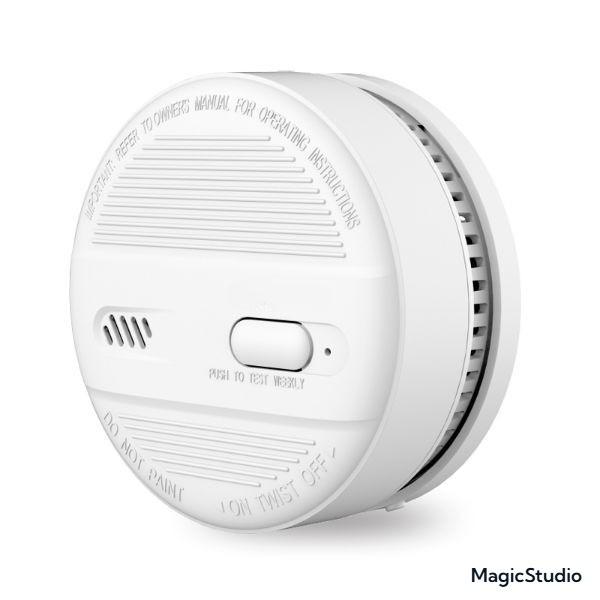
For temperature-based detection, Safelincs also lists an Intelligent Addressable Dual Heat Detector using fixed-temperature and rate-of-rise sensing with digital communication to the control panel. Standalone applications can use products such as the Battery Operated Smoke Detector, which is listed with a photoelectric sensor, ≥85 dB sound level at 3 metres and replaceable battery options.
Explore additional Addressable Smoke Detectors and Battery Operated Smoke Detectors.
Fire Alarm System Architecture
A fire safety system should be designed around the building size, required device identification and future system expansion.
1. Conventional System Architecture
A conventional system typically groups initiating devices into zones.
Detector / MCP → Zone Circuit → Conventional Panel
When an alarm occurs, the control panel identifies the affected zone rather than necessarily identifying an individual field device.
Explore Conventional Fire Alarm Panels.
2. Addressable System Architecture
An addressable fire alarm system communicates with individually identifiable compatible devices over an addressable circuit or loop.
Addressable Detector / MCP / Module → Loop → Addressable Fire Alarm Panel
This architecture can provide more detailed device identification and easier fault localisation in larger systems.
Safelincs provides Addressable Fire Alarm Systems, addressable detectors, manual call points, modules and alarm notification devices.
Device Addressing, Communication & Compatibility
One of the most important technical considerations in an addressable fire alarm system is device-to-panel compatibility.
Addressable field devices communicate using a manufacturer's supported communication protocol. The control panel must be able to recognize the device address, monitor its status and correctly interpret alarm or fault information.
For example, Safelinc's Addressable Manual Call Point uses digital addressing and is specified as compatible with the TX7004 analogue intelligent fire alarm control panel. Similarly, its Addressable Sounder and Strobe supports digital addressing, configurable sounder/strobe operation and loop or external power input.
Before mixing devices from different manufacturers or product ranges, always confirm:
Communication protocol
Panel compatibility
Address capacity
Loop loading
Current consumption
Wiring requirements
Manufacturer approval
Fire Alarm Notification & Manual Activation
Detection alone is not sufficient. A fire alarm system must also provide an effective method of communicating the alarm condition.
Typical notification and initiating devices include:
Manual call points
Alarm sounders
Visual strobes
Combined sounder-strobes
Input/output modules
Zone-monitor modules
For example, the Addressable Sounder and Strobe available from Safelincs supports multiple programmable tones, sounder-only, strobe-only or combined operation, and configurable addressing. The Addressable Manual Call Point provides manual alarm initiation and sends its addressable signal to the compatible control panel when activated.
These products are useful examples of why a fire alarm system should be considered as a communication network, not simply a collection of detectors.
Power Supply & Standby Capacity
Fire alarm systems require correctly designed electrical power.
Technical design should consider:
Control-panel power supply
Detector current
Loop current
Notification-device current
Auxiliary loads
Cable voltage drop
Standby battery capacity
Alarm-period load
Expansion capacity
Battery sizing should be calculated from the actual connected load and the standby/alarm requirements applicable to the project rather than selecting batteries only according to panel size. This becomes especially important when an addressable loop contains multiple detectors, modules, call points and notification devices.
Fire Extinguisher Technical Selection
Fire extinguishers should be selected according to fire hazard, extinguishing agent, fire rating, cylinder capacity and operating characteristics, not simply according to cylinder weight.
Important specifications include:
Extinguishing agent
Fire rating
Stored-pressure or cartridge design
Working pressure
Test pressure
Discharge range
Operating temperature
Cylinder construction
Certification
Gross and net weight
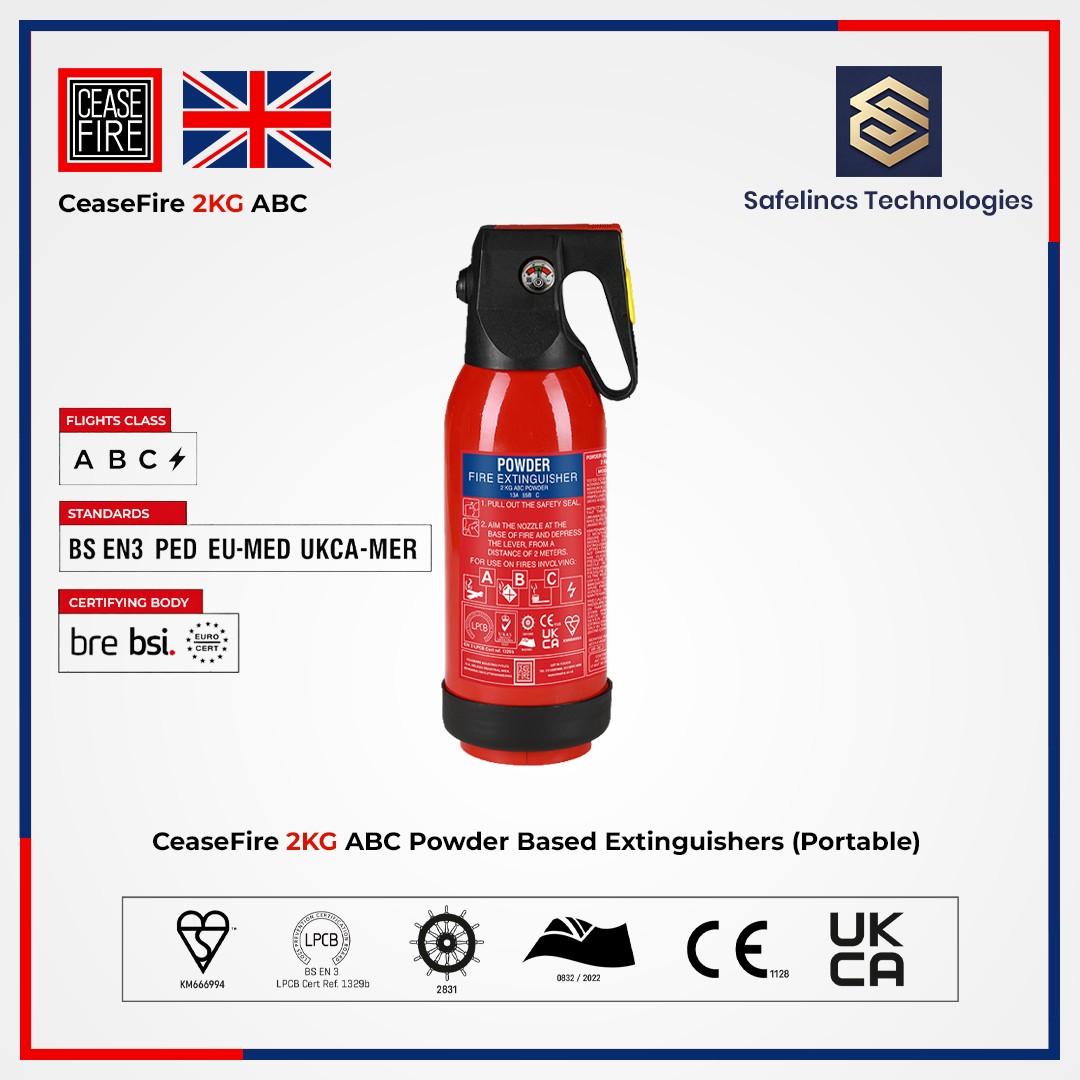
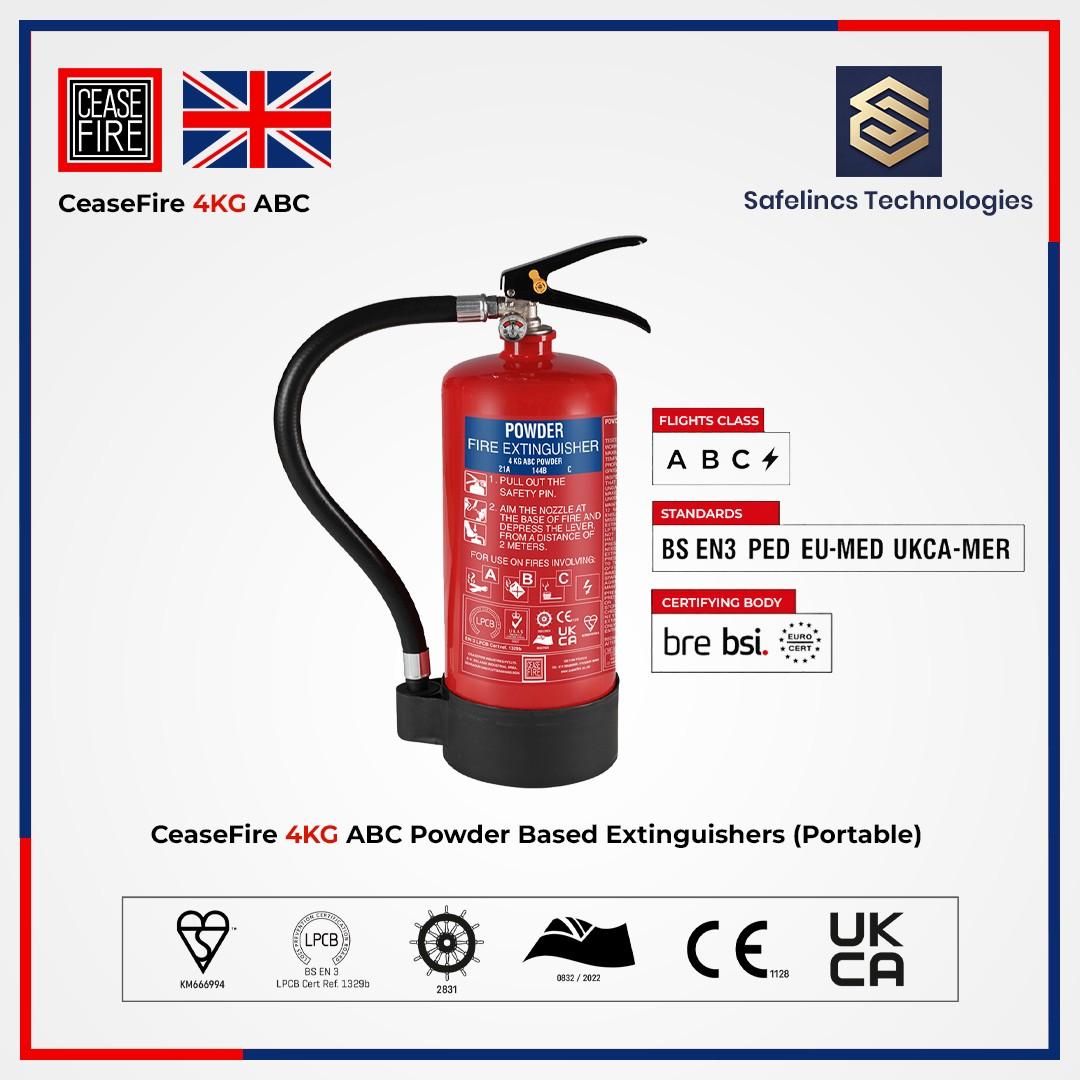
Safelincs provides ABC Fire Extinguishers,CO₂ Fire Extinguishers and Foam Fire Extinguishers, along with other extinguisher categories.
Example
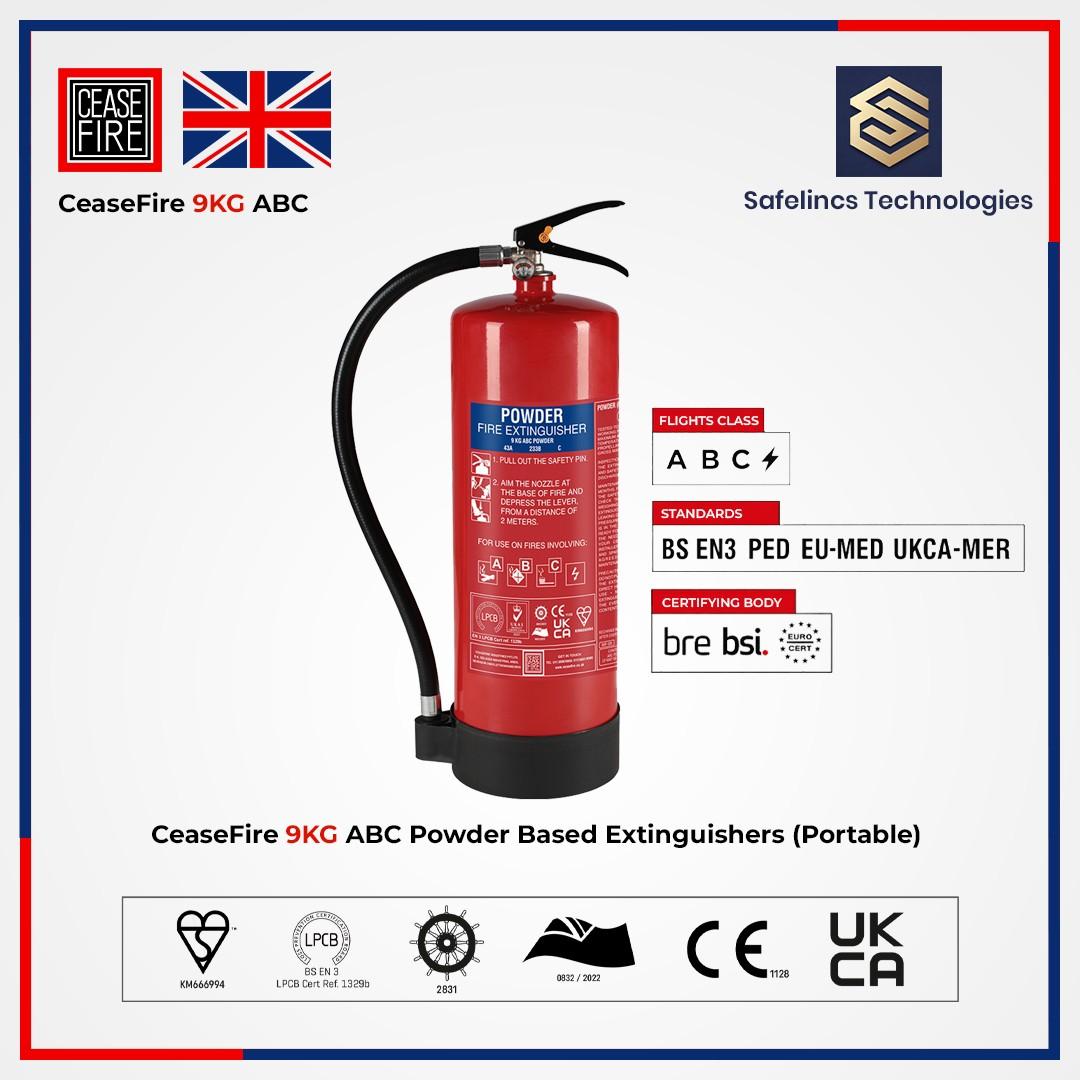
The 9 KG Cease Fire ABC Type Fire Extinguisher is listed as a stored-pressure unit using ABC MAP 50 powder. Its published specifications include:
43A / 233B fire rating
15 bar working pressure
35 bar hydrostatic test pressure
Approximately 7 m throw
-30°C to +60°C operating temperature
Pressure-relief and Schrader valves
These specifications demonstrate why two extinguishers with the same nominal capacity may have different technical performance. Another example is the Cease Fire 9 Litre AFFF Foam Fire Extinguisher, which is listed with 15 bar working pressure, 35 bar hydrostatic test pressure and a 6 m discharge throw.
Fire Hydrant System Engineering
A fire hydrant system is a pressurized water-delivery network designed around hydraulic performance rather than only individual hardware.
A typical layout may include:
Water Storage → Fire Pump → Main Pipework → Landing Valve / Hose Reel → Hose → Nozzle
Technical design factors include:
Required flow rate
Residual pressure
Static pressure
Pipe diameter
Pipe friction loss
Pump head
Number of operating hydrants
Hose length and diameter
Valve pressure rating
Nozzle characteristics
Water-storage capacity
Safelincs' fire-hydrant category currently includes Fire Hydrant Nozzles,Fire Hose Pipes & Hose Reels and Fire Hydrant Landing Valves.
The complete hydrant network should be hydraulically designed for the building rather than sizing the pump, piping and outlets independently.
Fire Sprinkler & Automatic Suppression Integration
Automatic sprinkler systems form another layer of active fire protection. A typical water-based arrangement may include:
Water Source → Fire Pump → Control Valve → Pipe Network → Sprinkler Heads
Important parameters include:
Hazard classification
Required water density
Pipe network
Hydraulic pressure
Available water flow
Sprinkler temperature rating
Pump performance
Alarm and monitoring interfaces
For common automatic sprinkler arrangements, the individual heat-responsive sprinkler operates when its activation element reaches its designed temperature; the exact arrangement depends on the sprinkler system type and engineered design.
Where sprinkler, hydrant and fire alarm systems are installed in the same facility, their interfaces and monitoring requirements should be coordinated during the system design stage.
Active & Passive Fire Protection
A complete fire safety solution normally combines active and passive protection.
1. Active Systems
These require an operating response or activation, such as:
Fire alarm systems
Smoke and heat detectors
Fire extinguishers
Hydrant systems
Sprinkler systems
2. Passive Protection
Passive protection helps restrict fire and smoke movement through the building. Safelincs provides Fire Rated Doors & Emergency Exit Doors as part of its fire-fighting and fire-protection range.
The technical objective is to combine early detection, rapid notification, fire control and compartmentation instead of relying on a single protection method.
Fire Safety Equipment for Commercial & Industrial Applications
Larger buildings require greater attention to system capacity and scalability. For offices, hotels, factories, warehouses, hospitals, schools and commercial properties, technical planning should consider:
Number of fire alarm zones or loops
Number of field devices
Detector environment
Panel expansion capacity
Cable distance
Voltage drop
Notification coverage
Hydrant pressure
Pump capacity
Extinguisher distribution
Emergency exits
Passive fire separation
Inspection access
Future expansion
An addressable installation, for example, may combine an Addressable Fire Alarm Panel, Addressable Smoke Detectors, manual call points, sounder-strobes and interface modules as one integrated fire alarm network. Safelincs currently sells these categories and devices within its fire alarm range.
Fire Safety Equipment for Homes
Residential fire protection generally requires a simpler architecture, but equipment selection should still consider detection location, audible warning, fire hazards and maintenance. For standalone detection, customers can explore Battery Operated Smoke Detectors.
One product example is the Battery Operated Smoke Detector, which uses a photoelectric sensing method and includes an integrated audible alarm. Depending on the property and risk, residential fire safety may also incorporate appropriately selected fire extinguishers and evacuation equipment.
Technical Factors to Check Before Buying Fire Safety Equipment
When comparing fire safety products, check the technical specification rather than only the product name.
1. For Fire Alarm Systems
Check:
Conventional or addressable architecture
Panel/device protocol
Loop or zone capacity
Device compatibility
Power requirements
Notification outputs
Battery requirements
Expansion capacity
2. For Smoke & Heat Detectors
Check:
Sensor technology
Operating environment
Panel compatibility
Alarm communication
Sensitivity characteristics
Indicator outputs
Certification
3. For Fire Extinguishers
Check:
Extinguishing agent
Fire rating
Capacity
Working pressure
Test pressure
Discharge mechanism
Operating temperature
Certification
4. For Fire Hydrant Equipment
Check:
Pressure rating
Flow requirements
Pipe and hose diameter
Valve size
Nozzle compatibility
Pump performance
5. For Fire Doors & Protective Equipment
Check:
Required fire-resistance performance
Door hardware compatibility
Application
Installation requirements
Product certification
Building a Complete Fire Protection System
A technically planned complete fire protection system may combine:
Detection
Addressable Smoke & Heat Detectors
↓
Control
Addressable Fire Alarm Panels orConventional Fire Alarm Panels
↓
Manual & Automatic Alarm Input
Smoke detectors, heat detectors andAddressable Manual Call Points
↓
Notification
Addressable Sounder & Strobe
↓
Initial Fire Suppression
Fire Extinguishers
↓
Firefighting Water System
Fire Hydrant Equipment
↓
Passive Protection & Evacuation
Fire Rated Doors & Emergency Exit Doors
The exact design should be based on project requirements, applicable fire-safety requirements and manufacturer specifications.
Buy Fire Safety Equipment from Safelincs Tech
Safelincs Tech provides fire safety equipment and products in Nepal across detection, alarm, suppression, firefighting and passive-protection applications. The current range includes extinguishers, fire alarm panels and devices, smoke and heat detectors, hydrant equipment, fire-rated doors and firefighting gear.
Explore our Fire Safety Equipments:
Frequently Asked Questions
1. What are the main technical components of a fire safety system?
A complete system can include detection devices, a fire alarm control panel, notification appliances, portable suppression equipment, hydrant or sprinkler systems and passive fire-protection components.
2. What is the difference between conventional and addressable fire alarm systems?
Conventional systems normally identify the affected circuit or zone. Addressable systems communicate with compatible individually addressed devices, allowing the control panel to identify specific device information.
3. Why is fire alarm device compatibility important?
Addressable panels and devices use specific communication protocols, electrical characteristics and configuration requirements. A device should therefore be confirmed as compatible with the selected control panel before installation.
4. What specifications should I check on a fire extinguisher?
Check the extinguishing agent, fire rating, capacity, working pressure, test pressure, operating temperature, discharge range and product certification.
5. What technical factors are important in a fire hydrant system?
Flow, residual pressure, pump head, pipe diameter, friction loss, hose characteristics, outlet quantity and water-storage capacity are among the main hydraulic considerations.
6. Can a standalone smoke detector be used without a fire alarm panel?
Yes, products designed specifically as standalone alarms can operate independently. For example, Safelincs lists a Battery Operated Smoke Detector with an integrated photoelectric sensor and audible alarm.
7. What is the difference between a smoke detector and a heat detector?
A smoke detector responds to smoke-related conditions using its sensing technology, while a heat detector responds to temperature characteristics such as a fixed temperature threshold, rate of temperature rise or both, depending on the model.
8. What fire safety equipment is suitable for commercial buildings?
The requirements depend on the property and risk assessment, but a commercial solution may include a fire alarm system, smoke/heat detection, manual call points, alarm notification, appropriate extinguishers, hydrant or suppression systems, fire-rated doors and evacuation equipment.