Fire Extinguisher Requirements for Hospitals & Healthcare Facilities: Selection, Placement & Safety Guide
Explore fire extinguisher requirements for hospitals and healthcare facilities in Nepal, including suitable types, quantity, placement, and safety considerations for patient wards, laboratories, medical equipment, and hospital kitchens.
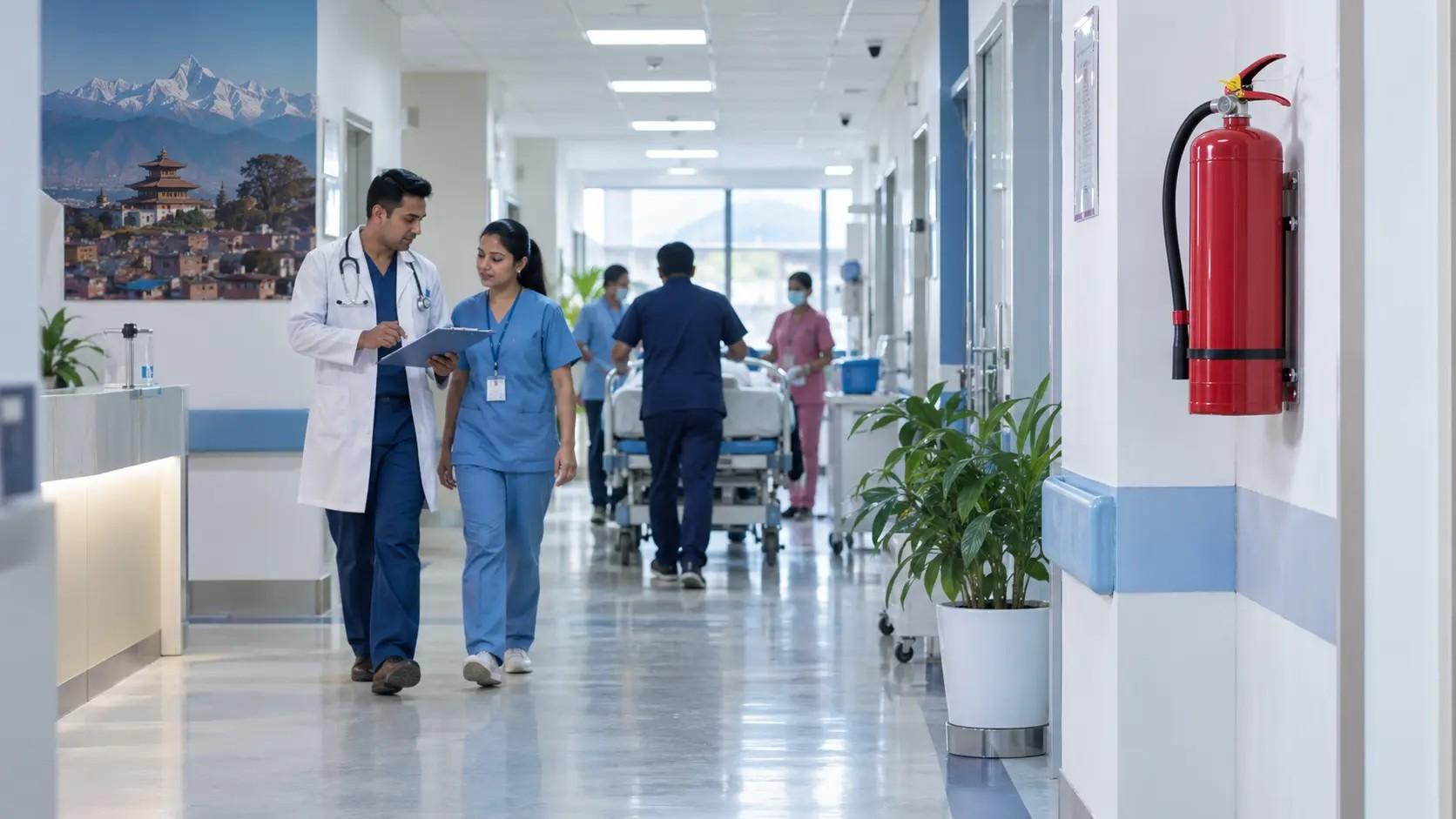
Hospitals and healthcare facilities require particularly careful fire-safety planning because fire protection must account not only for different types of fire hazards but also for patients who may be unable to evacuate without assistance.
A hospital can contain patient wards, laboratories, pharmacies, operating and diagnostic equipment, electrical rooms, server systems, medical-gas installations, kitchens, offices and storage spaces. Each area presents a different combination of combustible materials, ignition sources and operational risks.
For this reason, selecting a fire extinguisher for a hospital should not mean installing one extinguisher type throughout the entire facility.
A suitable strategy should consider the hazard within each department, extinguisher fire rating, sensitive medical equipment, number of hospital blocks, floors, accessibility, travel distance and the hospital's wider detection, alarm and evacuation systems.
Safelincs supplies multiple categories of fire extinguishers in Nepal, including ABC, CO₂, K-Type and clean-agent equipment for different applications. Its current guidance also emphasizes selecting extinguishers according to fire hazard, agent, fire rating and installation environment rather than cylinder size alone.
Why Hospital Fire Safety Requires Special Planning
Hospitals differ from most commercial properties because evacuation can be difficult. During an emergency, occupants may include patients who are: bedridden, undergoing treatment, using mobility aids, dependent on medical equipment, sedated or unconscious or located in critical-care areas.
As a result, hospital fire safety must emphasize early detection, rapid notification, compartment-level response, accessible firefighting equipment and organized evacuation procedures.
Nepal's Minimum Service Standards for Primary Hospitals provide a particularly useful local reference. Under the hospital disaster-mitigation section, the standards state that hospitals should have fire extinguishers in all blocks. The related safety checklist specifies at least one fire extinguisher in each block. It also includes a safety alarm system with smoke detection, exit signs in departments and wards, an identified assembly zone and recurring disaster-preparedness orientation for staff.
This gives healthcare facilities in Nepal a stronger planning baseline than relying only on generic recommendations.
However, one extinguisher per block should be treated as a minimum checklist provision, not automatically as the complete extinguisher quantity for every hospital. Larger blocks, multiple floors and specialist departments can require additional extinguishers according to fire hazards, fire ratings, travel distance and applicable project requirements.
Common Fire Risks in Hospitals and Healthcare Facilities
Hospital fire hazards vary significantly between departments.
Hospital Area | Typical Fire Hazards | Main Extinguisher Consideration |
Patient wards | Bedding, furniture, electrical medical equipment | General coverage + electrical consideration |
ICU/critical care | Sensitive medical equipment, wiring, oxygen-supported environments | Equipment sensitivity and safe agent selection |
Laboratories | Chemicals, electrical equipment, flammable liquids | Hazard-specific selection |
Pharmacy | Packaging, medicines, alcohol-based/flammable products where present | Stored-product assessment |
Diagnostic rooms | Imaging and electronic equipment | Electrical suitability and residue |
Server/IT rooms | Servers, UPS, networking equipment | CO₂/clean-agent consideration |
Electrical rooms | Panels, switchgear and wiring | Electrically suitable extinguisher |
Hospital kitchen | Cooking oils, LPG and electrical appliances | Kitchen-specific protection |
Administrative areas | Paper, furniture and computers | General + electrical protection |
Stores | Linen, paper, packaging, medical supplies | Fire-load assessment |
This is why hospital extinguisher planning should be based on departmental fire-risk zones rather than treating the hospital as one occupancy.
Which Fire Extinguishers Are Appropriate for Hospitals?
A hospital may require several extinguisher technologies. The correct selection depends on what could burn in each area and on the potential effect of the extinguishing agent on patients, medical equipment and the surrounding environment.
1. ABC Dry Powder Fire Extinguishers
ABC dry-powder extinguishers provide broad protection against several common fire hazards when correctly rated.They may be considered for appropriate general-risk areas involving combustible materials such as paper, cardboard, furniture, fabrics and similar materials.
Safelincs lists hospitals and other public/commercial facilities among typical applications for its ABC extinguisher range.
However, dry powder leaves considerable residue after discharge. That can be an important disadvantage near sensitive diagnostic, IT or medical equipment.
2. CO₂ Fire Extinguishers
CO₂ extinguishers are commonly considered for appropriate energized electrical equipment. Possible hospital applications include electrical rooms, control panels, server systems, UPS equipment and selected laboratory or diagnostic electronics.
CO₂ leaves virtually no solid residue, which makes it useful where powder contamination could damage sensitive equipment. Safelincs specifically lists laboratories and IT-related areas among potential CO₂ applications.
CO₂ should not automatically be used as a general ward extinguisher. Its use in confined or occupied areas requires appropriate assessment because discharge can displace oxygen locally, and its primary application is not deep-seated ordinary combustible fires.
3. Clean-Agent Fire Extinguishers
Clean-agent extinguishers can be particularly valuable where expensive or sensitive electronic equipment requires protection without powder residue.
Safelincs specifically identifies applications including: laboratories, research centres, electrical equipment rooms, computer centres, communications equipment and data/document storage. This can make clean-agent equipment worth considering for appropriate hospital: IT Rooms → Diagnostic Electronics → Control Rooms → Laboratories → Communication Equipment
The individual extinguisher's actual fire rating and approved application must still be checked before selection.
4. K-Type / Wet-Chemical Extinguishers
Hospitals with institutional or commercial kitchens should assess high-temperature cooking-oil and fat hazards separately. Safelinc’s K-Type fire extinguisher guidance specifically identifies institutional and commercial cooking environments as applications requiring specialist kitchen protection.
Fire Extinguishers for Patient Wards
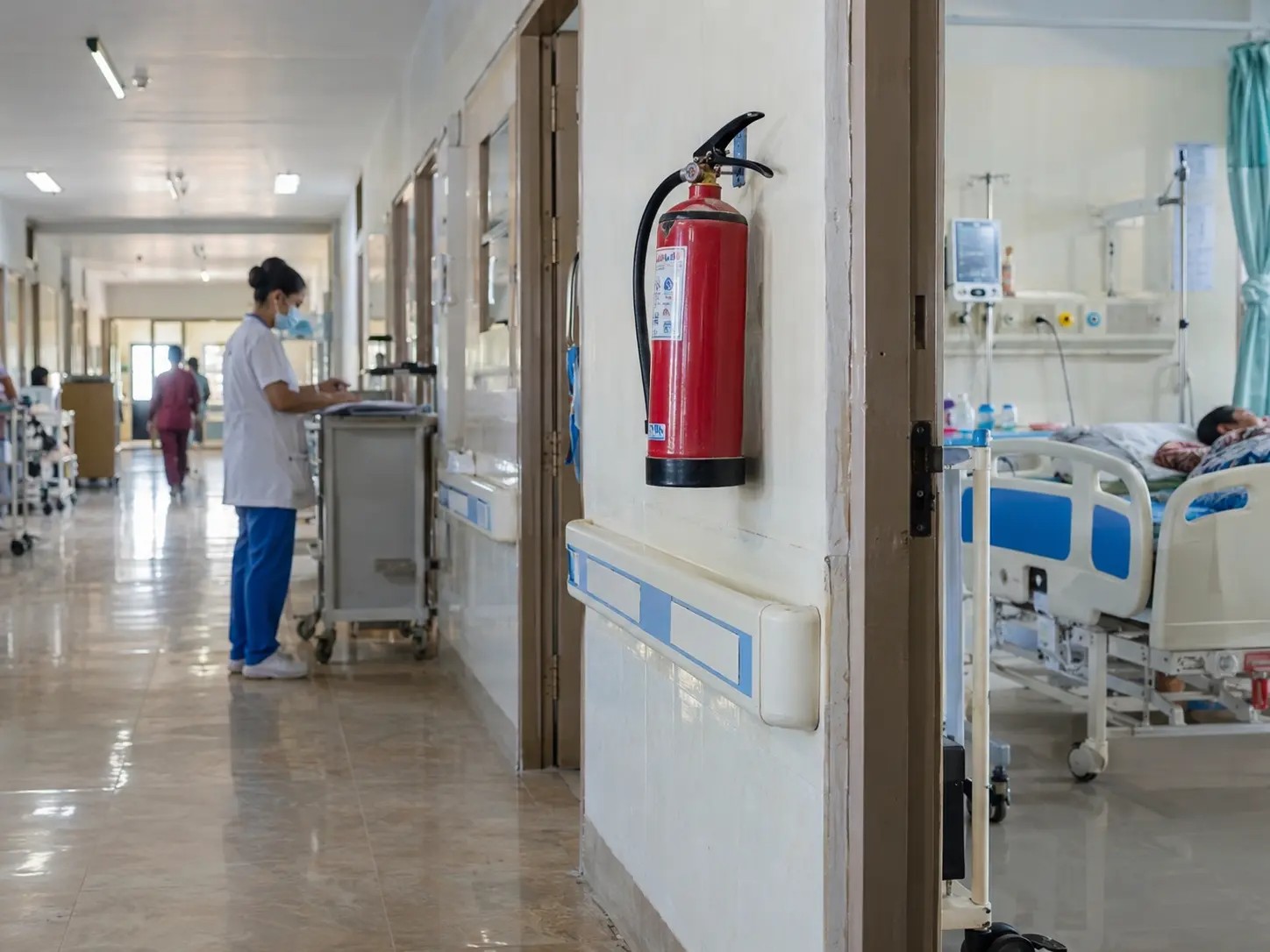
Patient wards typically contain ordinary combustible materials such as bedding, furniture, curtains, paper and personal belongings. They can also contain electrically powered medical devices. The extinguisher strategy should therefore consider both general combustibles and local electrical hazards.
Placement requires particular care because extinguishers must remain accessible without:
obstructing wheelchair or stretcher movement
narrowing evacuation routes
interfering with medical equipment
being hidden behind hospital furniture
Because evacuation may involve vulnerable or immobile patients, ward extinguishers should form part of a much broader response plan involving early detection, staff response and compartment-based evacuation.
Oxygen and Medical-Gas Areas
Hospitals may use oxygen cylinders, piped medical oxygen and other medical gases. An important technical distinction is that oxygen itself is not a combustible fuel, but increased oxygen concentration can make other materials ignite more easily and burn more intensely.
Hospital fire planning should therefore focus on: Ignition Control + Correct Storage + Medical-Gas Management + Appropriate Extinguishers + Emergency Procedures
The extinguisher should be selected according to the material that is actually burning rather than looking for a generic "oxygen fire extinguisher."
Medical-gas shutoff procedures should only be performed according to the hospital's emergency plan by appropriately authorized personnel because shutting down oxygen can directly affect patient care.
Fire Extinguishers for Laboratories
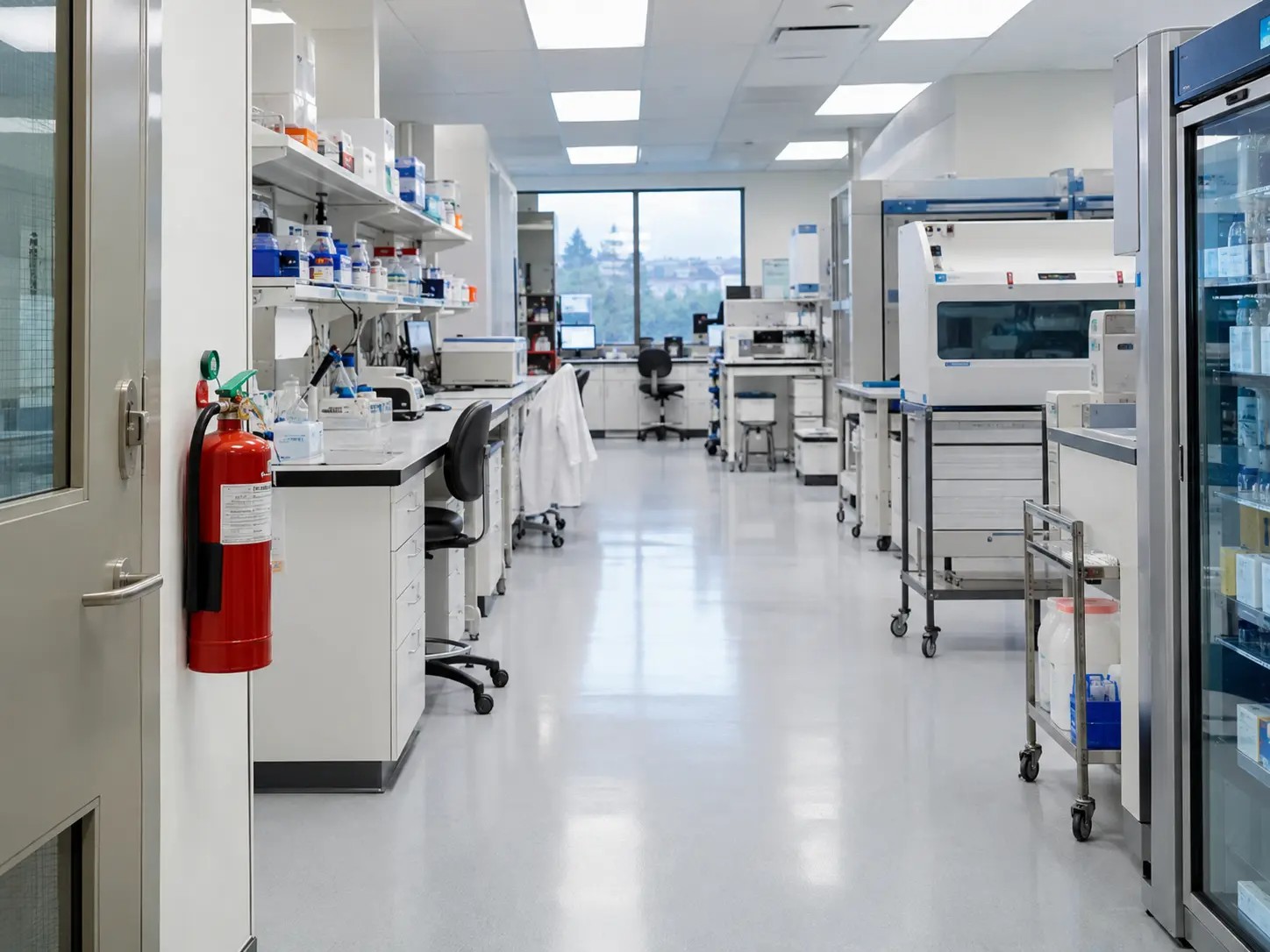
Hospital laboratories can contain significantly more complex hazards than patient wards. Depending on the facility, a laboratory may include: flammable liquids, solvents, reagents, biological materials, electrical testing equipment, heating devices and sensitive analytical instruments.
Laboratory extinguisher selection should therefore begin by identifying the chemicals and processes actually present. Safety Data Sheets should be reviewed for substances that may require specialist firefighting precautions.
ABC extinguishers may be suitable for some general hazards, while CO₂ or clean-agent extinguishers may be more appropriate for certain electrical or sensitive-equipment risks.
The key principle is: Do not automatically install the same extinguisher used in the hospital corridor inside every laboratory.
Fire Extinguishers for Pharmacies and Medicine Stores
Hospital pharmacies combine several potential risks. Typical materials may include paper and cardboard packaging, shelving, medical supplies and electrically powered equipment. Some facilities may also store products containing alcohol or other flammable substances. The fire-risk assessment should therefore consider:
Medicine Type + Packaging + Storage Quantity + Flammable Products + Electrical Equipment
Where specialist substances are stored, their SDS and manufacturer information should be checked. Large pharmacy stores or medical-supply warehouses may also have a substantially higher combustible fire load than the patient-facing pharmacy counter.
Fire Extinguishers for Diagnostic and Medical Equipment
Modern healthcare facilities contain expensive electronic equipment used for: patient monitoring, laboratory diagnostics, imaging, communication, data processing and medical procedures. Powder discharge around sensitive electronics can create significant contamination and cleanup. For suitable electrical hazards, CO₂ or an appropriately rated clean-agent extinguisher may therefore be considered.
Clean-agent equipment can be especially useful where limiting post-discharge residue is an important part of the risk assessment. Safelincs specifically positions its clean-agent range for high-value electronic equipment and laboratory environments.
Highly specialized environments, including imaging rooms with strong magnetic fields should be assessed against the equipment manufacturer's and facility's specific safety requirements. Portable equipment should never be assumed suitable simply because it is appropriate elsewhere in the hospital.
Fire Extinguishers for Server Rooms and IT Areas
Hospital operations increasingly depend on electronic systems such as: electronic health records, networking, CCTV, communications, patient information systems, servers and UPS equipment. These rooms may require additional protection because even a relatively small fire or extinguisher discharge can disrupt critical hospital services.
CO₂ or suitable clean-agent protection may be considered depending on the actual equipment and room conditions. The extinguisher should be positioned so staff do not have to move deeper into the server-room fire to retrieve it.
Fire Extinguishers for Electrical Rooms
Hospital electrical infrastructure can include:
Main Panels + Distribution Boards + UPS + Generator Controls + Switchgear + Medical Equipment Supplies
These areas should receive dedicated assessment. CO₂ may be considered for suitable energized electrical hazards. The extinguisher should remain clearly visible and accessible from a safe approach position. Electrical rooms should also not be used as convenient storage areas for paper cartons, linen or other combustible materials.
Fire Protection for Hospital Kitchens
Hospital kitchens can introduce: hot cooking oil, grease, LPG or gas, ovens, electrical appliances, refrigerators, packaging and extraction systems.
Where significant quantities of high-temperature cooking oil are used, K-Type/wet-chemical protection should be considered. A kitchen may therefore require a combination of protection rather than one extinguisher technology.
For example:
Cooking Oil Risk → K-Type
Electrical Risk → Appropriate CO₂
General Combustibles → Appropriately Rated General Protection
Selection should always follow the actual equipment, fuel and individual extinguisher rating.
Administrative Areas and Medical Records
Administrative areas commonly contain: paper, furniture, computers, printers and electrical equipment. Medical-record archives may contain a much greater concentration of paper and therefore a higher combustible fire load.
Archive rooms should be assessed separately from ordinary offices if they contain significant quantities of records. Where important electronic records or server equipment are present, residue considerations can also influence extinguisher selection.
How Many Fire Extinguishers Does a Hospital Need?
Nepal's Minimum Service Standards provide an important starting point. The Primary Hospital MSS states that hospitals should have fire extinguishers in all blocks, while Annex 3.7a identifies at least one fire extinguisher in each block as a basic safety amenity.
The same "fire extinguisher in all blocks" requirement also appears in Nepal's Minimum Service Standards documentation for secondary hospitals. However, this should not be interpreted as meaning that one extinguisher is always sufficient for an entire hospital block.
The actual quantity may need to increase according to:
Factor | Why it matters |
Number of blocks | Each block needs independent assessment |
Number of floors | Equipment on another floor may not provide practical coverage |
Floor area | Larger areas require appropriate distribution |
Fire rating | Determines tested firefighting capability |
Travel distance | Extinguishers must remain safely reachable |
Department risk | Labs, kitchens and electrical rooms may require dedicated units |
Building layout | Corridors, secure zones and compartments affect accessibility |
Patient movement | Placement must support evacuation and clinical access |
A stronger design sequence is: Hospital Survey → Divide Into Fire-Risk Zones → Identify Hazards → Select Extinguisher Agent → Verify Fire Rating → Assess Each Block/Floor → Check Travel Distance → Add Specialist Protection → Determine Quantity → Finalize Placement
Safelincs' own technical guidance likewise states that extinguisher numbers, travel distance and distribution should follow the fire-risk assessment and applicable requirements.
Where Should Fire Extinguishers Be Positioned?
Hospital extinguishers should generally remain visible, unobstructed, properly mounted and easy for trained personnel to reach. Safelincs also advises that extinguishers should not be positioned where the developing fire itself could prevent safe access.
Typical areas requiring assessment include ward blocks, corridors, floor exits, laboratories, electrical rooms, IT/server areas, pharmacies, kitchens, stores and administrative sections. However, hospitals have an additional concern: the extinguisher location must not interfere with patient evacuation or clinical movement.
Equipment should therefore be positioned so that: Firefighter Access + Staff Access + Patient Movement + Escape Route can all function together.
Fire Extinguishers Are Only One Part of Hospital Fire Safety
Portable extinguishers are designed for initial fire suppression. They should never be treated as the hospital's complete fire-protection system.
Nepal's Primary Hospital MSS supports this wider approach. Along with extinguishers, it references safety alarm systems including smoke detection, exit signs throughout departments and wards, assembly zones, disaster-preparedness training and a hospital rapid-response function. A comprehensive hospital strategy should therefore follow:
Detection → Alarm → Staff Response → Initial Suppression → Patient Movement/Evacuation → Firefighting Response
Safelincs' wider fire-safety guidance similarly describes complete protection as a combination of detection, signal processing, alarm notification, suppression, firefighting and evacuation measures.
Hospital Fire Alarm and Detection Systems
Early warning is particularly important in healthcare facilities because some occupants cannot evacuate independently. A properly designed system can include smoke or heat detectors, manual call points, fire-alarm panels, sounders/strobes and interface modules.
Safelincs' current fire-alarm system guidance states that system design should consider building occupancy, floor area, number of levels, detector placement, panel capacity, alarm coverage, cable routing, backup power and interfaces with other fire-safety systems.
In larger hospitals, addressable detection can also help facility teams identify the specific device or location reporting an alarm rather than responding only to a broad zone indication.
Inspection, Staff Training and Emergency Readiness
Hospitals should establish documented extinguisher inspection and servicing procedures. Routine checks should confirm that equipment remains in its designated location, access is clear, tamper seals and safety pins are intact, pressure indication is normal where applicable, hoses/nozzles are undamaged and signage remains visible.
Nepal's Primary Hospital MSS also includes disaster-preparedness orientation for staff at least every six months as part of its disaster-mitigation indicators. Hospital employees expected to respond to an initial fire should understand which extinguisher matches which hazard and when evacuation or other emergency action must take priority.
For suitable portable extinguishers, the basic operating method is commonly remembered as PASS (Pull, Aim, Squeeze, Sweep). Safelincs emphasizes that the PASS method should only be attempted after confirming that the extinguisher is appropriate and the fire remains small enough to approach safely.
Hospital Fire Safety Checklist
Fire extinguishers provided across hospital blocks
At least one extinguisher in each block used as a baseline MSS check
Each floor and department assessed separately
Patient wards assessed for combustible and electrical risks
Laboratories assessed according to chemicals and equipment
Pharmacies and medicine stores evaluated
Sensitive diagnostic equipment considered
Electrical rooms and panels independently assessed
Server/IT rooms protected appropriately
Hospital kitchen and cooking-oil hazards assessed
Medical-gas and oxygen procedures established
Correct extinguisher agents and fire ratings selected
Quantity adjusted for area, floors, hazards and travel distance
Extinguishers remain visible and unobstructed
Equipment does not obstruct stretcher/wheelchair movement
Fire detection and safety alarms are operational
Exit signs are visible in wards and departments
Assembly areas are identified
Staff receive scheduled disaster/fire-preparedness orientation
Extinguishers are routinely inspected and serviced
Patient evacuation and emergency-response procedures are documented
Choosing Fire Extinguishers for Hospitals in Nepal
Hospital fire protection should begin with one principle “Different hospital departments create different fire hazards”. A practical extinguisher strategy may consider:
ABC Dry Powder: suitable general combustible and mixed hazards where appropriate.
CO₂: appropriate energized electrical and electronic equipment.
Clean Agent: sensitive, high-value electronic, laboratory and communication equipment where residue is an important concern.
K-Type/Wet Chemical: high-temperature cooking-oil and fat hazards in institutional kitchens.
The exact extinguisher agent, rating, capacity, quantity and placement should be determined from the real hospital layout and fire-risk assessment.
For Nepal healthcare facilities, the Minimum Service Standards give a clear starting point by requiring extinguishers throughout hospital blocks and identifying at least one extinguisher in each block as a basic safety amenity. But larger and higher-risk hospital blocks should be engineered beyond that minimum based on their departments, floors, equipment and travel distances. Safelincs Technologies supplies fire extinguishers in Nepal together with fire safety equipment for hospitals, healthcare institutions and other commercial facilities.
Frequently Asked Questions
1. Which fire extinguisher is best for a hospital?
There is no single extinguisher suitable for every hospital area. General areas, electrical rooms, laboratories, sensitive medical equipment and kitchens can require different extinguisher technologies.
2. How many fire extinguishers does a hospital need in Nepal?
Nepal's Primary Hospital Minimum Service Standards specify fire extinguishers in all blocks and list at least one extinguisher in each block as a basic safety amenity. Larger blocks and specialist areas may require additional units according to area, hazard, fire rating and travel distance.
3. Which extinguisher should be used around medical electrical equipment?
CO₂ or an appropriately rated clean-agent extinguisher may be considered for suitable electrical and sensitive-electronic hazards. Selection should follow the specific equipment environment and individual extinguisher rating.
4. Which fire extinguisher is suitable for a hospital laboratory?
It depends on the substances and equipment present. Laboratories should be assessed individually using their chemical inventory, SDS information and electrical hazards rather than automatically using the extinguisher installed in general hospital areas.
5. Do hospital kitchens require a different extinguisher?
Potentially yes. Kitchens using significant quantities of high-temperature cooking oil should consider K-Type/wet-chemical protection in addition to protection for other kitchen hazards.
6. Do hospitals need extinguishers near patient wards?
Hospital blocks and ward areas require appropriate extinguisher coverage, but placement must preserve patient movement and evacuation routes. Nepal's MSS also specifically calls for fire extinguishers throughout hospital blocks.
7. Is an ABC extinguisher suitable everywhere in a hospital?
No. Although ABC extinguishers can provide broad protection for suitable hazards, powder residue can be undesirable around sensitive medical, diagnostic and electronic equipment.
8. Are portable extinguishers enough for hospital fire safety?
No. Hospital protection also requires appropriate detection, alarms, evacuation planning, exit identification, staff preparedness and other active/passive fire-safety systems according to the facility. Nepal's hospital MSS explicitly combines extinguisher requirements with alarm systems, smoke detection, exit signs and disaster-preparedness measures.