
Managed vs Unmanaged PoE Switch: Which Is Better for CCTV and Networking?
Discover the key differences between managed and unmanaged PoE switches for CCTV surveillance and business networking. Learn about their features, performance, security, power requirements and applications to choose the right PoE switch for your network.
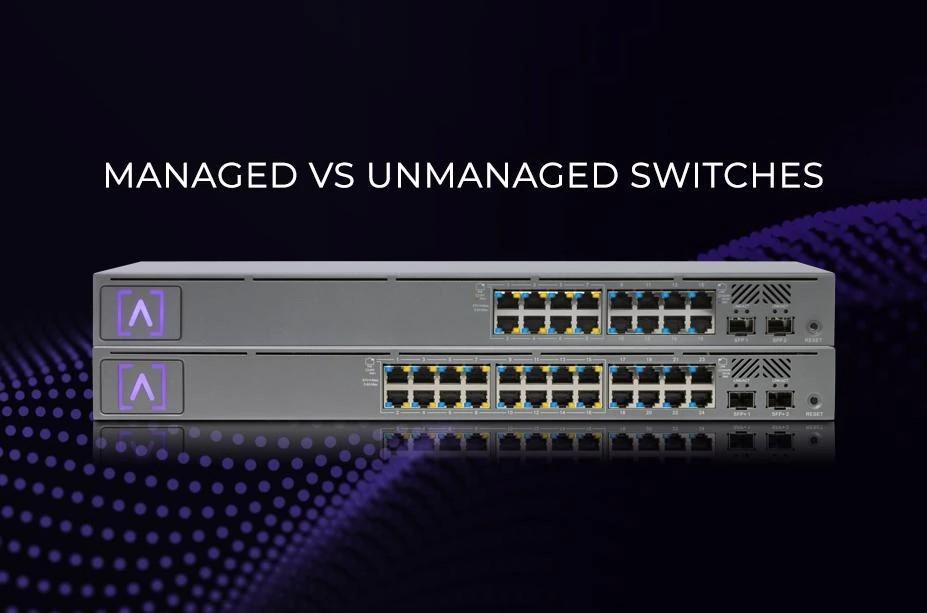
A reliable CCTV surveillance system or business network depends on more than just cameras, routers and cables. The network switch is an essential component that determines how connected devices communicate, receive power and operate within the network infrastructure. When installing IP CCTV cameras, wireless access points or VoIP phones, choosing between a managed vs unmanaged PoE switch can significantly affect network administration, security, troubleshooting and scalability.
Both managed and unmanaged PoE switches provide Ethernet connectivity and electrical power to compatible devices through a single network cable. However, they differ in their network configuration capabilities, traffic management, monitoring features and deployment complexity.
An unmanaged PoE switch is generally suitable for small CCTV installations that require straightforward connectivity, while a managed PoE switch provides additional control for business networks, advanced CCTV systems and environments that require network segmentation.
Understanding their differences can help homeowners, CCTV installers and IT professionals choose suitablePoE network switches from Safelincs Technologies according to their technical and operational requirements.
What Is a Managed PoE Switch?
A managed PoE switch is a network switching device that provides Power over Ethernet while allowing administrators to configure, monitor and control network operations through a management interface.
Unlike basic plug-and-play switches, managed PoE switches may provide advanced Layer 2 networking capabilities such as VLAN configuration, Quality of Service (QoS), port management, traffic monitoring and network security policies.
Depending on the manufacturer and model, a managed switch can be configured through a web-based dashboard, command-line interface, network management software or cloud-based management platform.
Key Features of Managed PoE Switches
1. VLAN Configuration and Network Segmentation
Virtual Local Area Networks (VLANs) allow network administrators to divide one physical switching infrastructure into multiple logical networks. This helps separate different categories of network traffic without requiring completely independent switching hardware.
For example, a commercial building may use separate VLANs for CCTV cameras, employee computers, wireless access points and guest internet access. VLAN segmentation creates distinct Layer 2 broadcast domains, while inter-VLAN communication can be controlled using routing and firewall policies.
This is especially useful for IP surveillance systems connected to a corporate network, where separating CCTV traffic from ordinary office traffic can simplify network administration and support security policies.
2. Quality of Service (QoS)
Quality of Service allows administrators to classify or prioritize certain categories of network traffic when network congestion occurs. In business environments, switches may prioritize latency-sensitive traffic such as VoIP communications. Surveillance traffic can also be classified or assigned dedicated capacity according to the network design.
QoS does not increase the physical bandwidth of a connection, but it can help manage congestion by determining how traffic is handled when network resources are limited.
3. Network Monitoring and Diagnostics
Managed PoE switches provide visibility into connected devices and network port activity. Depending on the model, administrators may monitor port status, link speed, traffic utilization, error counters and PoE power consumption.
Some switches support Simple Network Management Protocol (SNMP), system logging, alerts and remote diagnostics, allowing IT personnel to identify potential connectivity problems without physically inspecting every network connection. For CCTV installations, these capabilities can help determine whether a camera is disconnected, a port is experiencing errors or the network is approaching its bandwidth limits.
4. Port-Level PoE Management
Certain managed PoE switches allow administrators to enable or disable PoE on individual ports, check connected-device power usage and establish power priorities. For example, when an IP camera becomes unresponsive, an administrator may be able to restart the camera by remotely cycling power to its PoE port.
This functionality depends on the switch model and management software; it should not be assumed to be available on every managed switch.
5. Network Security Controls
Managed switches may support security features such as port isolation, Access Control Lists (ACLs), 802.1X authentication, DHCP snooping and MAC-based restrictions. These functions help administrators implement access policies and reduce unauthorized network activity when configured correctly. However, feature availability varies, particularly between smart-managed and fully managed switches.
For businesses requiring managed network infrastructure, Safelincs Technologies provides Ruijie and Reyee network switches suitable for different installation requirements.
What Is an Unmanaged PoE Switch?
An unmanaged PoE switch is a networking device that automatically forwards Ethernet traffic between connected devices and supplies electrical power to compatible PoE equipment without requiring advanced network configuration.
It generally operates as a plug-and-play device. When an Ethernet cable connects a compatible IP camera, access point or other network device, the switch establishes the network connection and supplies power according to its supported PoE standard and available power budget.
Unmanaged switches learn connected devices' MAC addresses and forward Ethernet frames toward the appropriate ports. However, they typically do not provide the same configuration controls, network segmentation options or detailed diagnostics available on managed switches.
Key Features of Unmanaged PoE Switches
1. Plug-and-Play Installation
One of the main advantages of an unmanaged PoE switch is straightforward installation. Users generally do not need to configure VLANs, management addresses or network policies before connecting devices.
For a small CCTV setup, an installer can connect IP cameras to the PoE ports and connect the switch uplink to a compatible Network Video Recorder (NVR) or existing network infrastructure. The cameras may still require IP addressing, credentials and NVR configuration, but the switch itself generally requires little or no configuration.
2. Automatic Ethernet Frame Forwarding
Unmanaged switches automatically learn MAC addresses and use their forwarding tables to deliver Ethernet frames between network ports. This allows IP cameras, recorders and other Ethernet devices to communicate through the network, provided their IP configurations and network connectivity are correct.
3. Power over Ethernet Support
Unmanaged PoE switches can provide electrical power to compatible devices using IEEE PoE standards. The available output depends on each switch's hardware specifications, including per-port power limits and total PoE budget.
For example, a 4-port unmanaged PoE switch may supply power to four compatible IP cameras if the overall consumption remains within the switch's available power capacity.
4. Lower Configuration and Maintenance Requirements
Because unmanaged PoE switches have limited management functionality, they are easier to deploy in environments where complex network administration is unnecessary. They are commonly used for residential surveillance systems, small shops, standalone CCTV installations and straightforward network expansion. Safelincs offers multiple Dahua PoE switches in Nepal, including unmanaged models suitable for different surveillance network requirements.
Managed vs Unmanaged PoE Switch: Key Differences
Both managed and unmanaged PoE switches can provide reliable Ethernet connectivity and power delivery. Their main differences involve network control, administrative visibility, security configuration and deployment complexity.
Feature | Managed PoE Switch | Unmanaged PoE Switch |
Network configuration | Configurable through supported management interfaces | Generally plug-and-play |
VLAN support | Configurable VLANs on supported models | Usually no configurable VLANs |
Traffic management | QoS and traffic controls on supported models | Basic Ethernet forwarding |
Network monitoring | Port statistics, diagnostics and alerts may be available | Limited diagnostics, often LED indicators |
PoE management | May support per-port control and power monitoring | Usually automatic power delivery |
Network security | May provide ACLs, port security and authentication features | Limited configuration-based security |
Remote management | Available on supported models | Generally unavailable |
Installation complexity | Requires additional configuration for advanced features | Simple installation |
Initial equipment cost | Typically higher for comparable specifications | Typically lower for comparable specifications |
Best suited for | Managed CCTV networks, offices and enterprises | Homes, shops and small standalone networks |
A managed switch is not automatically faster than an unmanaged switch. Actual data transfer performance depends on port speeds, switching capacity, uplink bandwidth, buffering and the switch's hardware specifications.
Similarly, both types may support Gigabit Ethernet and modern PoE standards, depending on the selected model.
Advantages and Disadvantages of Managed PoE Switches
a. Advantages
1. Greater Network Control
Managed PoE switches allow network administrators to configure ports, VLANs and traffic policies according to operational requirements. This is particularly useful when multiple departments, security systems and business applications share the same physical network infrastructure.
2. Improved Troubleshooting Capabilities
Port-level statistics, system logs and management dashboards make it easier to identify network connection problems. In surveillance systems with many IP cameras, this visibility can help reduce the time required to investigate faulty connections or power-related issues.
3. Better Support for Network Segmentation
With VLAN-capable switches, organizations can separate CCTV, employee, guest and management traffic into different logical networks. Properly configured routing and security policies can restrict communication between these segments.
4. Remote Administration
Supported managed switches allow authorized administrators to modify settings, inspect port conditions and perform certain troubleshooting tasks remotely. This is useful for businesses with multiple floors, buildings or branch offices.
b. Disadvantages
1. Higher Initial Cost
Managed PoE switches generally cost more than unmanaged alternatives with similar port counts, speeds and power capacities because of their additional networking and management features.
2. Additional Configuration Requirements
Advanced functions such as VLAN segmentation, access control and QoS require correct configuration. Incorrect settings can prevent cameras, NVRs or other network devices from communicating.
3. Greater Administrative Complexity
Businesses may require trained IT personnel or network installers to configure and maintain managed switches, particularly when security policies or complex network architectures are involved.
Advantages and Disadvantages of Unmanaged PoE Switches
a. Advantages
1. Simple Installation
Unmanaged PoE switches usually require no switch-side network configuration. This makes them convenient for small CCTV installations where the devices operate on a straightforward local network.
2. Cost-Effective for Smaller Systems
For users who do not require VLAN configuration or centralized network monitoring, unmanaged switches can provide essential network connectivity at a lower equipment cost.
3. Suitable for Dedicated CCTV Networks
An unmanaged PoE switch can function effectively in a dedicated IP surveillance network when the cameras, switch and recorder are correctly connected and their bandwidth and power requirements are satisfied.
Disadvantages
1. Limited Network Visibility
Unmanaged switches typically do not provide detailed per-port traffic statistics, centralized monitoring or event logs, making advanced troubleshooting more difficult.
2. Limited Traffic and Security Configuration
Users generally cannot configure VLANs, access control rules or detailed traffic priorities directly on an unmanaged switch.
3. Reduced Flexibility for Complex Installations
As a network expands across multiple floors or departments, centralized configuration and monitoring may become more valuable than the simplicity of unmanaged switching.
Which PoE Switch Is Better for CCTV Camera Systems?
The most suitable PoE switch for CCTV depends on the number of cameras, network topology, recording bandwidth, power requirements and operational complexity.
1. Residential CCTV Surveillance Systems
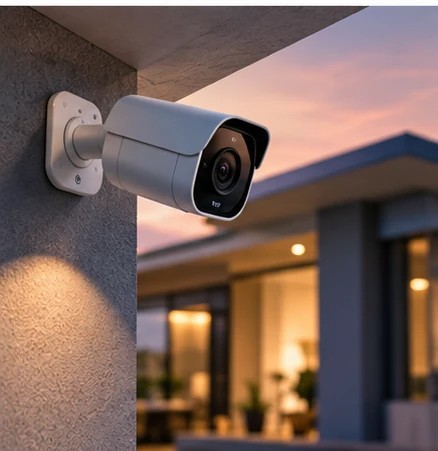
Residential surveillance systems often consist of a limited number of IP cameras monitoring entrances, parking spaces, gardens and outdoor areas. For a home installation with four or eight cameras, an unmanaged PoE switch is often sufficient when the cameras and NVR operate on a straightforward local network.
A typical residential IP surveillance configuration is: IP CCTV Cameras → PoE Switch → NVR → Router / Monitoring Device
The PoE switch supplies electrical power to compatible cameras and transfers their video streams to the network. TheNetwork Video Recorder receives and records supported camera streams according to its channel capacity and bandwidth specifications. Before installing the system, verify that the switch provides enough PoE ports, adequate total power and suitable Ethernet link speeds.
2. Retail Shops and Small Office CCTV Systems
Retail stores, restaurants and smaller offices may use several IP cameras to monitor entrances, customer areas, counters and storage rooms. An unmanaged PoE switch can be appropriate when the CCTV network is small and isolated from more complex business networking infrastructure.
However, if surveillance equipment shares a network with billing systems, office computers, wireless access points and other business devices, a managed PoE switch may provide useful VLAN segmentation and monitoring capabilities.
For example, a retail store may use separate network segments for security cameras, point-of-sale terminals and guest Wi-Fi connections.
3. Commercial Buildings and Multi-Floor Surveillance
Larger commercial buildings may require CCTV cameras across multiple floors, parking areas, corridors and restricted-access locations. Such installations often use multiple PoE switches connected to aggregation switches and centralized recording equipment.
Managed PoE switches become valuable when administrators need to monitor multiple network links, organize camera traffic through VLANs, configure uplink connections and troubleshoot equipment across different areas of the building.
A commercial CCTV network may follow this architecture: IP Cameras → Managed PoE Access Switches → Aggregation Switch → NVR / Video Management Server
For these installations, uplink speed and aggregate video bandwidth are especially important. A switch with many PoE ports may still experience network congestion if its uplink cannot accommodate the combined traffic of connected cameras.
4. Warehouses, Factories and Large Surveillance Networks
Industrial facilities, warehouses and large commercial premises may require surveillance cameras across extensive areas. Managed PoE switches can support network monitoring, segmentation and centralized administration. Industrial-grade switches may also be necessary where equipment is exposed to extreme temperatures, electrical interference or demanding installation conditions.
When selecting switches for such environments, consider enclosure protection, environmental operating specifications, surge protection, cable distance and power availability in addition to management features.
Safelincs Technologies provides CCTV surveillance cameras and supporting network equipment for different residential and commercial installations.
Which PoE Switch Is Better for Business Networking?
Business networks commonly support equipment beyond CCTV cameras, including wireless access points, VoIP phones, employee workstations and access control devices. Although unmanaged PoE switches can connect these devices, managed switches provide additional functions that become useful as networks grow.
1. Office Network Infrastructure
In a typical office, multiple departments may share the same switching infrastructure. Managed switches allow administrators to organize traffic through VLANs, configure port policies and monitor network performance.
For example, separate VLANs may be assigned to administrative computers, employee devices and IP surveillance equipment. Routing and firewall rules can then control permitted communication between those networks.
2. Wireless Access Point Networks
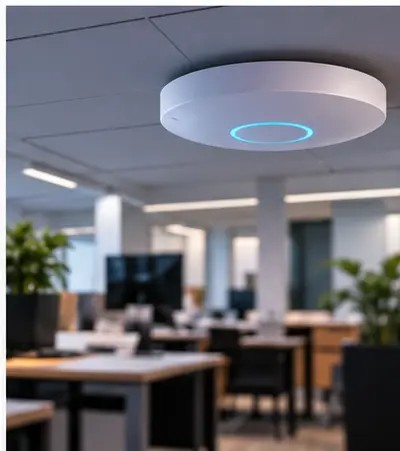
Businesses with multiple wireless access points may require different wireless networks for employees, guests and administrative devices. Managed PoE switches that support IEEE 802.1Q VLAN tagging can carry multiple logical networks over compatible uplink connections. This allows VLAN-aware wireless access points and network infrastructure to maintain separate traffic segments.
The PoE capability supplies power to supported access points, reducing the need for separate power adapters near every installation point.
3. VoIP Communication Systems
Voice over Internet Protocol (VoIP) phones rely on network connectivity for real-time communication. Managed switches with appropriate QoS functionality can help prioritize voice traffic during network congestion. Some enterprise switches also support voice VLAN configuration and additional administrative controls.
The selected PoE switch must provide sufficient power for connected IP phones and meet the organization's network performance requirements.

Technical Factors to Consider Before Choosing a PoE Switch
Selecting a managed or unmanaged PoE switch should involve evaluating the complete networking environment rather than comparing management features alone.
1. PoE Standards and Power Output
Power over Ethernet is defined through IEEE standards that establish how compatible network equipment receives electrical power through Ethernet connections.
The main standards include:
PoE Standard | Maximum Power at Switch Port | Maximum Power at Powered Device |
IEEE 802.3af (PoE) | 15.4W | 12.95W |
IEEE 802.3at (PoE+) | 30W | 25.5W |
IEEE 802.3bt Type 3 | 60W | 51W |
IEEE 802.3bt Type 4 | 90W | Approximately 71W |
The actual power available to a connected device may be lower than the switch-port output because electrical power is lost during transmission through Ethernet cables.
Standard IP cameras may operate within lower PoE power classes, whereas some PTZ cameras, infrared-equipped devices and high-power wireless access points require PoE+ or PoE++. Always verify device compatibility and the required PoE standard before installation.
2. Total PoE Power Budget
The PoE power budget indicates the total electrical power a switch can allocate to devices connected to its PoE-enabled ports. For example, consider an eight-camera CCTV installation where every IP camera requires a maximum of 12W.
Total Camera Power Requirement = 8 × 12W = 96W
In this situation, the switch must support at least 96W of actual allocated power under the relevant operating conditions.
A switch with a 120W total PoE budget may be suitable if its individual ports support the cameras' power requirements and the switch can allocate sufficient power to all eight devices.
Additional allowance should be considered for devices with variable power consumption, future expansion and the switch's power allocation method. A switch with eight PoE ports does not necessarily have enough power to operate eight high-power cameras simultaneously.
3. Fast Ethernet vs Gigabit Ethernet
Ethernet port speed affects the maximum data rate available between cameras, recorders and other network equipment. Fast Ethernet commonly supports up to 100 Mbps, while Gigabit Ethernet supports up to 1,000 Mbps.
Some CCTV cameras can operate on 100 Mbps access ports, depending on their video bitrate and network requirements. However, links carrying aggregated video from multiple cameras may require Gigabit or faster connectivity.
For example, if 16 cameras each transmit an average video stream of 8 Mbps, the combined average camera traffic is approximately: 16 × 8 Mbps = 128 Mbps
A single 100 Mbps uplink would be insufficient for this combined traffic, even before accounting for protocol overhead and changes in video bitrate. Selecting an appropriate uplink capacity is therefore essential for larger CCTV networks.
4. Number of PoE Ports and Network Expansion
PoE switches are available with different port configurations, including 4-port, 8-port, 16-port and 24-port options. Choose a switch according to the actual number of PoE-enabled devices and any planned expansion.
For example, a business installing six cameras may prefer an eight-port PoE switch rather than using a smaller switch with no room for expansion.
Also check how many ports are PoE-capable, because the total number of Ethernet ports may include separate non-PoE uplink ports.
5. VLAN and Network Security Requirements
For businesses connecting CCTV equipment to broader network infrastructure, VLAN segmentation can help separate surveillance traffic from other network services.
However, VLANs are not complete security controls by themselves. Network administrators should also configure appropriate routing restrictions, firewall policies, access permissions and device authentication. A managed switch is preferable when such switch-level configuration capabilities are required.
6. Ethernet Cable Quality and Transmission Distance
Standard twisted-pair Ethernet connections generally have a channel-length limit of 100 meters for conventional copper Ethernet installations. Cable quality, conductor material, wire gauge, termination quality and installation conditions affect both data transmission and PoE performance. High-resistance or poor-quality cabling can increase voltage drop and reduce the power available at connected equipment.
Certain extended-range PoE technologies support longer transmission distances under specific configurations, often with reduced data speeds or other limitations. These extensions should not be confused with ordinary IEEE Ethernet cable-distance specifications.
For reliable surveillance installations, use suitable network cabling and verify compatibility with the cameras and switches being installed.
Managed and Unmanaged PoE Switches Available at Safelincs Technologies
Safelincs Technologies provides a selection of network switches and CCTV connectivity equipment for residential, commercial and professional security installations in Nepal. Customers can explore different switch configurations according to port requirements, total power capacity, network management functions and compatibility with connected equipment.
1. Dahua PoE Switches
Dahua PoE Switches in Nepal include unmanaged and cloud-managed models designed for different networking and surveillance applications. Examples listed by Safelincs include the Dahua DH-PFS3218-16ET-135 unmanaged PoE switch and Dahua cloud-managed switch models such as the DH-CS4218-16ET-135.
These devices serve different requirements, ranging from straightforward IP camera connectivity to networks needing supported cloud-management features.
2. Reyee and Ruijie Network Switches
Safelincs also providesReyee and Ruijie PoE switches, including smart cloud-managed Gigabit PoE models. An example is the RG-ES210GC-LP, a 10-port Gigabit smart cloud-managed PoE switch listed in the Safelincs product category.
Customers looking for additional managed and unmanaged networking equipment can explore theRuijie and Reyee Network Switch category. Before purchasing, review the individual switch specifications for supported VLAN functionality, PoE power output, switching capacity, management interfaces and other required features.
Conclusion: Managed vs Unmanaged PoE Switch – Which Should You Choose?
Both managed and unmanaged PoE switches play an important role in IP CCTV surveillance and Ethernet-based networking environments.
An unmanaged PoE switch is generally a practical and cost-effective choice for homes, small shops and straightforward surveillance installations where plug-and-play connectivity is sufficient.
A managed PoE switch is more suitable for businesses, multi-floor CCTV installations and larger networking environments that require configurable VLANs, network monitoring, remote management or advanced traffic controls.
However, network management is only one factor. The selected switch must also provide adequate PoE power, compatible Ethernet port speeds, sufficient uplink bandwidth and appropriate environmental specifications.
For reliable CCTV and networking installations, explore the range ofDahua PoE switches,Reyee and Ruijie network switches andNetwork Video Recorders available at Safelincs Technologies Nepal.
Frequently Asked Questions (FAQs)
1. What is the main difference between a managed and an unmanaged PoE switch?
A managed PoE switch allows administrators to configure network settings, monitor traffic and control supported networking features. An unmanaged PoE switch generally operates automatically without requiring switch configuration, making it simpler for smaller networks.
2. Is a managed PoE switch necessary for CCTV cameras?
A managed PoE switch is not necessary for every CCTV system. Small installations can operate using unmanaged switches, while larger systems may benefit from VLAN configuration, remote monitoring and advanced network management.
3. Can an unmanaged PoE switch power IP CCTV cameras?
Yes, an unmanaged PoE switch can supply electrical power and network connectivity to compatible IP cameras through Ethernet cables. The switch must support the camera's PoE standard and have sufficient available power for all connected devices.
4. Are managed PoE switches more secure than unmanaged switches?
Managed PoE switches can provide additional security configuration options such as VLANs, port security and access controls. These features improve network administration when configured correctly, but a managed switch is not automatically secure without appropriate settings.
5. Does a managed PoE switch improve network speed?
A managed PoE switch does not inherently provide higher network speeds than an unmanaged switch. Performance depends on port speed, switching capacity, available bandwidth and network configuration, although managed features can help control traffic during congestion.
6. Can an unmanaged PoE switch connect to an NVR?
Yes, an unmanaged PoE switch can connect compatible IP cameras to a Network Video Recorder through an Ethernet network. The cameras and NVR must have suitable network configuration, supported protocols and sufficient bandwidth for recording.
7. What is the difference between PoE, PoE+ and PoE++?
PoE (IEEE 802.3af) provides up to 15.4W per switch port, while PoE+ (IEEE 802.3at) supports up to 30W. IEEE 802.3bt supports higher power levels of up to 60W or 90W per port, depending on the device type.
8. How many CCTV cameras can a PoE switch support?
The number of cameras depends on the switch's PoE-enabled port count, total power budget and available network bandwidth. For example, an eight-port PoE switch can physically connect up to eight compatible cameras if its power capacity supports their combined requirements.
9. Are managed PoE switches worth the extra cost?
Managed PoE switches are worthwhile when an installation requires network segmentation, centralized monitoring or advanced configuration features. For small standalone CCTV systems, an unmanaged switch may provide the necessary functionality at a lower initial cost.
10. Which PoE switch is best for a small business?
An unmanaged PoE switch may be sufficient for a small business with a straightforward CCTV network. A managed switch is preferable when the business needs VLAN separation, multiple network services, additional monitoring or more advanced network controls.
11. Can I use Cat6 cable with managed and unmanaged PoE switches?
Yes, suitable Cat6 Ethernet cables can be used with both managed and unmanaged PoE switches. The installation should meet the required cable specifications, distance limits and power-delivery requirements of the connected equipment.
12. What should I check before buying a PoE switch in Nepal?
Check the number of PoE ports, total power budget, supported IEEE PoE standards, Ethernet speeds and uplink capacity. Also evaluate whether managed networking features are necessary and confirm compatibility with the intended CCTV cameras, NVRs or wireless access points.