
Battery-Operated Smoke Detectors in Nepal: Complete 2026 Guide
Learn how stand-alone battery-operated smoke detectors work, the types available in Nepal, installation and placement guidelines, battery lifespan, certifications, testing and maintenance for homes, shops, offices and warehouses.
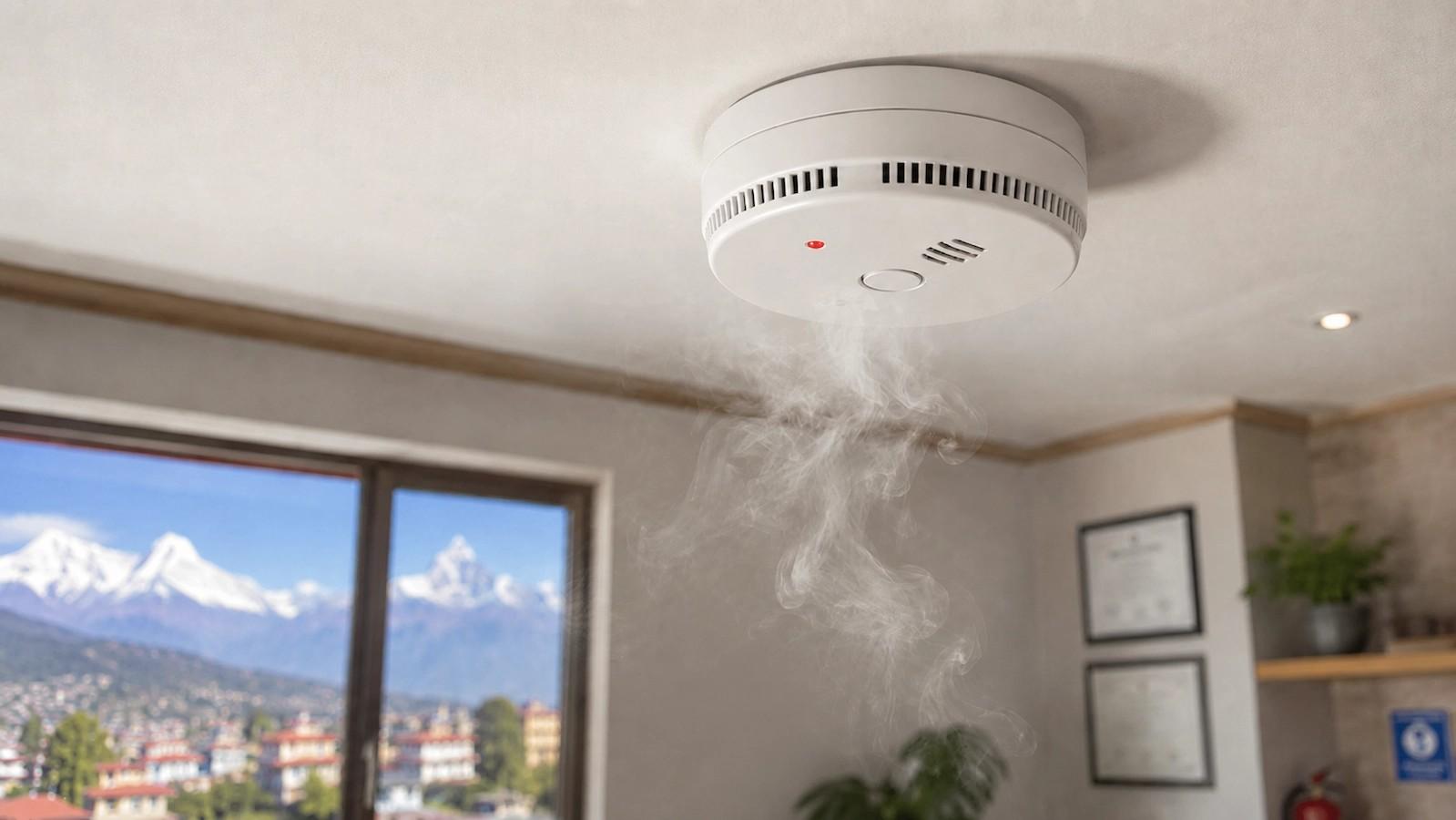
A fire often begins quietly. An overheated charger, damaged electrical cable or appliance fault may start producing smoke long before flames become obvious. That is why battery operated smoke detectors are one of the simplest ways to add early fire warning to a home, shop, office or small commercial property.
Unlike conventional fire alarm systems that may depend on cabling, a control panel and mains power, a battery powered smoke detector can operate as a self-contained device. This makes it particularly useful for existing buildings where installing a complete wired fire alarm system may not be practical.
Today, buyers in Nepal can choose from basic 9V stand-alone alarms, long-life lithium models, wireless interlinked detectors and smart smoke alarms with app-based notifications.
Explore Battery-Operated Smoke Detectors in Nepal
What Is a Battery-Operated Smoke Detector?
A battery operated smoke detector is a self-contained fire detection device that uses an internal battery to power its smoke sensor, electronic circuitry and audible alarm.
A typical unit contains:
Smoke-sensing chamber
Electronic processing circuit
Built-in alarm sounder
Battery
Test button
Low-battery warning
Mounting base
Because these components are integrated into one unit, a basic battery only smoke detector does not require a separate fire alarm control panel.
When the sensor detects smoke above its designed threshold, the detector activates its built-in siren to warn people nearby.
One example is the 9 Volt Battery Operated Stand-Alone Smoke Detector.
Types of Battery-Powered Smoke Detectors
Battery smoke detectors have developed beyond the traditional single-room alarm.
The main formats can be understood as:
Stand-Alone → Wireless Interlinked → Smart Connected Detector
Each serves a different type of property.
1. Traditional 9V Stand-Alone Smoke Detector
This is the simplest form of battery powered smoke detector. The detector operates independently using a replaceable battery. If smoke reaches that detector, the alarm built into that specific unit sounds.
Best suited for:
Individual rooms
Small shops
Guard rooms
Small offices
Storage areas
Garages
Selected utility areas
Main advantage
Installation is simple because no communication network or fire alarm control panel is required.
Main limitation
The alarm is local. If smoke is detected in one part of a larger property, a person on another floor may not immediately hear it.
Explore about the 9V Stand-Alone Battery Smoke Detector and its pricing.
2. 10-Year Lithium Battery Smoke Detectors
Some battery operated smoke alarms use a sealed long-life lithium battery rather than a replaceable 9V battery. The main benefit is reduced battery maintenance. Instead of replacing batteries regularly, the sealed power source is designed to operate for the specified service period of the detector.
Safelincs also lists a10-Year Battery Operated Smoke Detector.
9V vs 10-Year Lithium
Feature | Replaceable 9V | Sealed Lithium |
Battery | Replaceable | Built-in/sealed |
Maintenance | Battery changes required | Lower battery maintenance |
Initial cost | Usually lower | Usually higher |
Convenience | Standard | Higher |
Replacement | Battery + detector lifecycle | Detector replaced at end of service life |
Always check the exact battery specification and manufacturer instructions of the detector you are purchasing.
3. Wireless Interlinked Smoke Detectors
A wireless interlinked detector adds communication between multiple alarms. Instead of every detector working completely independently, compatible units communicate through wireless radio signals.
If one detector detects smoke, the connected units can also activate.
Example
Imagine a three-storey home. A detector on the ground floor senses smoke at night. With a basic stand-alone alarm, only that detector sounds.
With compatible wireless interlinked smoke detectors, alarms on the upper floors can also activate, giving occupants throughout the building an earlier warning.
This makes interlinked systems particularly useful for:
Multi-storey houses
Larger homes
Schools
Offices
Small commercial properties
Buildings with several separate rooms
View Battery Operated Wireless Smoke Detector
4. Smart IoT Smoke Detectors
Smart smoke detectors add digital communication to traditional smoke sensing. Depending on the device, connectivity may be provided through technologies such as:
WiFi
Zigbee
Smart home gateway
Tuya / Smart Life platform
Other supported wireless protocols
A smart detector can provide more than a local siren. Depending on the model and system configuration, it may send a notification to a smartphone when an alarm event occurs.
This can be particularly useful for:
Shops when the owner is away
Warehouses
Offices
Server or IT rooms
Remote properties
Smart homes
However, app notifications depend on the specific detector, gateway and internet configuration, so always confirm compatibility before purchasing.
How Does a Battery Smoke Detector Work?
The most important part of a smoke detector is its sensing chamber. Two well-known smoke detection technologies are photoelectric and ionization sensing.
Photoelectric / Optical Smoke Detection
Photoelectric smoke detectors use light to detect particles entering the sensing chamber. Under normal conditions, the light source is arranged so that the sensor does not receive significant direct light. When smoke enters the chamber, particles scatter the light.
Some of that scattered light reaches the photosensor, allowing the detector electronics to recognize a possible smoke condition and activate the alarm.
Simplified principle
Normal condition
Light source → Light path
Sensor remains largely unaffected
Smoke condition
Light source → Smoke particles → Scattered light → Sensor → Alarm
Photoelectric sensing is commonly associated with detecting visible smoke produced during many slow, smouldering fires.
Examples may include fires involving:
Furniture
Fabrics
Electrical insulation
Mattresses
Similar combustible materials
Ionization Smoke Detection
Ionization detectors use an ionization chamber to monitor changes in electrical current. When smoke particles enter the chamber, they interfere with the ion flow. The detector electronics recognize the change and trigger the alarm when the programmed threshold is reached. Ionization technology has traditionally been associated with faster-flaming fire conditions.
For most buyers, however, the important point is not simply which technology sounds more advanced.
Always check the actual sensor type, certification and intended application of the detector.
Stand-Alone vs Interlinked vs Smart Smoke Detector
Feature | Stand-Alone | Wireless Interlinked | Smart Connected |
Battery powered | Yes | Yes | Usually |
Wiring between alarms | No | No | No |
Local siren | Yes | Yes | Yes |
Other alarms activate | No | Yes | Depends on system |
Phone notifications | No | No | Supported models |
Best for | Smaller areas | Larger/multi-floor properties | Remote monitoring |
Complexity | Low | Medium | Higher |
The best choice depends on the size of the property and how quickly people need to be alerted.
Battery-Operated Smoke Detector for Homes
For houses and apartments, early warning is particularly important at night when occupants may be asleep.
Common installation areas can include:
Bedrooms
Areas outside sleeping rooms
Hallways
Landings
Living areas
Each level of a multi-storey house
For larger houses, an interlinked system can offer an advantage because an alarm starting on one floor can be communicated to compatible detectors elsewhere in the property.
Battery Smoke Detectors for Shops and Offices
A battery smoke detector can also provide a practical solution for smaller commercial properties that do not already have a complete fire detection system.
Possible applications include:
Retail stores
Office rooms
Stockrooms
Small warehouses
IT rooms
Guard rooms
Selected electrical and utility areas
The detector type should always match the environment. Dust, steam, airflow, temperature and the nature of the activity inside the room can influence detector selection and placement.
Where Should You Install a Smoke Detector?
Correct placement is just as important as choosing the detector itself. Common locations include:
1. Bedrooms and sleeping areas: An alarm should be positioned so occupants can hear it while sleeping.
2. Hallways and escape routes: Hallways can provide useful locations for warning occupants before smoke spreads through important escape routes.
3. Living areas: Smoke detectors may be useful in living areas containing electrical equipment, furniture and other combustible materials.
4. Multi-storey buildings: Consider suitable detection on every relevant level of the property.
5. Commercial areas: Depending on the building, smoke detection may be considered for stockrooms, offices, electrical areas and other spaces requiring early warning.
Locations to Avoid
Smoke detectors should generally not be installed where normal environmental conditions can continuously interfere with the sensor.
Examples include locations:
Directly above cooking appliances
Inside very humid bathrooms
Immediately beside strong air-conditioning outlets
In unusually dusty environments
Where airflow prevents smoke from naturally reaching the detector
Always follow the manufacturer's installation instructions because placement requirements can differ between detector models.
How to Install a Stand-Alone Battery Smoke Detector ?
One advantage of a basic battery detector is that installation usually does not require fire alarm cabling.
A typical installation process is:
1. Select the location: Choose a suitable ceiling or wall position according to the detector manufacturer's instructions.
2. Remove the mounting base: Separate the detector from its mounting plate.
3. Mark the mounting points: Position the base and mark the fixing holes.
4. Install the bracket: Use appropriate screws and anchors for the surface.
5. Insert or activate the battery: For replaceable-battery models, install the specified battery. For sealed units, follow the manufacturer's activation procedure.
6. Attach the detector: Secure the alarm to its mounting bracket.
7. Test the alarm: Press the TEST button and confirm that the alarm sounder operates correctly. Installation details can vary, so always follow the documentation included with the specific detector.
Smoke Detector Battery Life and Maintenance
A smoke detector can only provide protection when it remains powered and functional.
1. Replaceable Battery Models
Traditional detectors often use replaceable batteries such as 9V batteries. These need to be checked and replaced according to the manufacturer's recommendations. A recurring chirping sound may indicate a low-battery condition, although alarm patterns differ between products.
2. Long-Life Lithium Models
Some battery powered smoke detectors use sealed lithium batteries designed for a much longer operating life. Once the detector reaches the end of its specified operating life, the entire alarm may need to be replaced rather than simply changing the battery.
3. Test the Alarm Regularly
Use the built-in TEST function at the interval recommended by the manufacturer.
Testing helps confirm that:
Power is available
Electronics are functioning
Alarm sounder operates
4. Keep the Detector Clean
Dust and insects can interfere with smoke-sensing chambers. Keep the outer vents clean according to the manufacturer's maintenance instructions. Avoid painting the detector or covering its air openings.
What Certifications Should You Look For?
Smoke alarms are life-safety products, so certification should be part of the buying decision. International standards buyers may encounter include:
1. EN 14604: A European standard covering smoke alarm devices intended for residential and similar applications.
2. UL 217: A United States standard associated with smoke alarm performance requirements.
3. AS 3786: An Australian standard covering smoke alarms.
The presence of a certification should be verified on the specific product documentation.
Do not assume every smoke detector sold under the same general category carries the same approvals.
Smoke Detector vs Smoke and Carbon Monoxide Detector
A smoke detector and carbon monoxide detector do not monitor the same hazard. A standard battery operated smoke detector detects smoke associated with fire. A carbon monoxide detector is designed to detect carbon monoxide gas.
Some products combine both functions into a single battery operated smoke detector and carbon monoxide alarm.
If you are specifically searching for battery operated smoke CO detectors, check whether the product is a genuine combination unit rather than assuming a normal smoke alarm detects carbon monoxide.
This distinction is important when comparing products.
Battery-Operated Smoke Detector Price in Nepal
The battery operated smoke detector price in Nepal depends on more than the battery type.
Factors that can influence price include:
Sensor technology
Replaceable vs sealed battery
Stand-alone vs interconnected operation
Wireless RF communication
Smart/app connectivity
Alarm output
Product certification
Brand
Additional smart functions
A basic 9V smoke alarm battery operated model will generally be more affordable than an interlinked or smart connected detector. However, the lowest-priced product is not automatically the best choice.
For fire safety equipment, consider the detector's technology, certification, coverage requirement and application before comparing price.
Browse Battery-Operated Smoke Detectors
Which Battery-Operated Smoke Detector Should You Choose?
1. Choose a standard stand-alone detector if:
You need basic local detection
The room or property is relatively small
You want simple installation
Remote alerts are unnecessary
2. Choose a 10-year lithium detector if:
You want less battery maintenance
Long-term convenience is important
3. Choose wireless interlinked detectors if:
You have several floors
One alarm needs to warn occupants elsewhere
The property contains several rooms
4. Choose a smart detector if:
You want app notifications
The property may be unattended
Remote monitoring is important
The best battery operated smoke detector is the one that matches the property's layout and the way occupants need to be alerted.
Troubleshooting Common Smoke Alarm Problems
1. The detector is chirping
A periodic chirp commonly indicates a battery or detector-status warning. Check the product manual and battery condition.
2. The alarm activates without an obvious fire
Possible causes can include:
Cooking smoke
Steam
Dust
Insects
Incorrect placement
First make sure there is genuinely no fire or smoke condition before silencing the alarm. Then check the manufacturer's troubleshooting instructions.
3. The test button does not produce an alarm
Check:
Battery installation
Battery condition
Detector activation
Product instructions
If the detector still fails its test, it should not be relied upon for protection until the issue is resolved.
Choosing the Right Smoke Detector Starts With the Property
A battery operated smoke alarm is attractive because it can provide independent smoke detection without requiring extensive fire alarm cabling.
But not every property needs the same type of alarm. For a small room, a basic stand-alone detector may be sufficient. For a multi-storey home, interconnected alarms can provide wider warning. For a shop, warehouse or remote room that is often unattended, a smart connected detector may offer additional monitoring options. And for buyers who want lower maintenance, a sealed long-life lithium detector may be preferable to a standard replaceable-battery unit.
The most important approach is to compare:
Sensor Technology + Battery Type + Communication + Certification + Property Size + Installation Environment
rather than buying a smoke detector based only on price.
Explore Battery-Operated Smoke Detectors at Safelincs Technologies
Frequently Asked Questions
1. Are battery operated smoke detectors reliable?
A properly installed, maintained and tested detector can provide independent smoke detection without relying on mains electricity. Product quality, certification, battery condition and placement are important.
2. Do battery powered smoke detectors work during a power cut?
Yes. A properly functioning battery-powered unit operates from its own battery, so normal mains power loss does not prevent it from operating.
3. How long does a battery smoke detector last?
It depends on the detector. Some models use replaceable batteries, while others use sealed long-life batteries. The detector itself also has a manufacturer-specified service life.
4. What is the difference between a stand-alone and interlinked smoke detector?
A stand-alone unit sounds only its own alarm. Compatible interlinked detectors can communicate so that multiple alarms sound when one detector detects smoke.
5. Can a battery-operated smoke detector send notifications to my phone?
A basic detector cannot. Selected smart models using WiFi, Zigbee or another supported system may provide app notifications.
6. Does a smoke detector detect carbon monoxide?
A standard smoke detector does not automatically detect carbon monoxide. You need a dedicated CO detector or a certified combination smoke-and-CO alarm.
7. Which battery operated smoke detector is best for a three-storey house?
For a multi-storey property, compatible wireless interlinked detectors can provide an advantage because an alarm occurring on one level can activate alarms throughout the connected system. View Wireless Interlinked Battery Smoke Detector
8. Where can I buy battery-operated smoke detectors in Nepal?
Safelincs Technologies offers different battery operated smoke detectors in Nepal, including stand-alone, long-life battery and wireless detector options. View Battery-Operated Smoke Detectors